Booking a helicopter tour is a bucket-list experience. Whether you are soaring over the Grand Canyon, circling a tropical coastline, or taking a scenic city flight, the views are completely unmatched. But as the rotors spin up and the helicopter lifts off the tarmac, that feeling of awe can quickly be replaced by a sinking, churning sensation in your stomach.
Airsickness is incredibly common, and helicopters are notorious for triggering it even in people who never get carsick. If you want to enjoy the aerial views without reaching for the dreaded motion sickness bag, you need a game plan.
Here is the science behind why helicopters make you dizzy, along with the best SEO-optimized, proven strategies to prevent motion sickness in the air.
Why Do Helicopters Trigger Motion Sickness?
Motion sickness always boils down to a sensory mismatch. Your brain relies on your eyes, your inner ear (vestibular system), and your physical body to understand where you are in space.
Unlike an airplane, which mostly moves forward in a straight line, a helicopter moves dynamically in three dimensions. It hovers, drops, sways side-to-side, and banks sharply.
Your inner ear feels every single one of these rapid, unpredictable multi-directional shifts. But if you are looking down at your phone, staring at the floor of the cabin, or looking at the seat in front of you, your eyes tell your brain that you are sitting perfectly still. Your brain panics at this conflicting information and triggers a nausea response to protect you.
Pre-Flight Prep: Setting Your Stomach Up for Success
Stopping airsickness starts 24 hours before you even get to the helipad.
-
Hydrate, But Don’t Overdo It: Drink plenty of water the day before, but avoid chugging a massive bottle right before boarding. A sloshing stomach is a recipe for disaster.
-
The “Goldilocks” Meal: Do not fly on an empty, highly acidic stomach, and definitely skip the heavy, greasy breakfast. Eat a light, bland meal about an hour before your flight—think dry toast, crackers, or a plain banana.
-
Skip the Coffee and Alcohol: Both caffeine and alcohol dehydrate you and make your inner ear much more sensitive to movement. Stick to water or real ginger ale.
In the Air: Hacks to Keep Your Equilibrium
Once you are strapped in and your headset is on, use these physical tricks to keep your brain and body in sync.
1. Secure the Best Seat
When you book your tour, ask if you can sit in the front next to the pilot. The front seat offers a massive, unobstructed 180-degree view. This allows your eyes to see the exact movements your body is feeling, immediately curing the sensory mismatch. If you must sit in the back, ask for a window seat.
2. Lock Onto the Horizon
No matter where you are sitting, find the horizon line and keep your eyes glued to it. Do not look straight down at the ground passing directly beneath you, as the rapid movement will instantly trigger dizziness. The distant horizon acts as a stable visual anchor for your brain.
3. Blast the Air Vents
Helicopter cabins can get warm, especially with the sun beating through the bubble glass. A sudden rise in body temperature is a primary trigger for nausea. As soon as you sit down, point the overhead air conditioning vents directly at your face. The cool air shocks your nervous system and helps suppress the urge to vomit.
The Ultimate Drug-Free Fix: The Pisix Band
If you are prone to motion sickness, relying on seat placement alone might not be enough. Taking an over-the-counter pill like Dramamine before your flight will settle your stomach, but the heavy drowsiness will leave you feeling like a zombie for the rest of your vacation day.
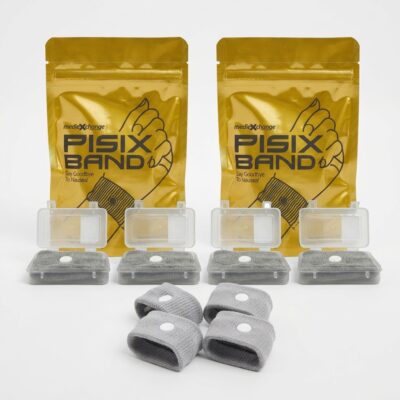
For fast, chemical-free relief that keeps your mind sharp, make sure you pack the Pisix Band.
The Pisix Band is a soft, breathable cotton wristband that uses ancient acupressure to stop nausea at the source. It features a built-in stud that applies gentle, continuous pressure to the Nei-Kuan (P6) acupressure point on your inner forearm. Stimulating this specific nerve pathway actively intercepts the nausea signals traveling from your brain to your stomach.
Why Flyers Rely on It:
-
Zero Drowsiness: Because it is 100% drug-free, you can enjoy your scenic flight and the rest of your day with total mental clarity.
-
Continuous Relief: Worn as a pair (one on each wrist), they provide constant, even pressure without cutting off circulation.
-
Immediate Action: You can slip the bands on while reviewing the safety briefing, or put them on mid-flight the second you feel a wave of dizziness for rapid recovery.