You’ve checked your gear, reviewed the dive plan, and are incredibly excited to explore the vibrant coral reef below. But as the dive boat leaves the harbor and hits the open ocean swells, your stomach drops. The cold sweat kicks in, the horizon starts spinning, and suddenly, putting on a tight wetsuit feels like a nightmare.
Seasickness is the ultimate dive-ruiner. Not only is it miserable, but severe nausea and dehydration can actually make diving dangerous.
If the boat ride to the dive site leaves you feeling green, you aren’t alone. Here is the science behind why divers get seasick, how to prevent it on the boat, and the best drug-free solutions to keep your stomach settled so you can focus on the fish.
The Science: Why the Dive Boat Makes You Sick
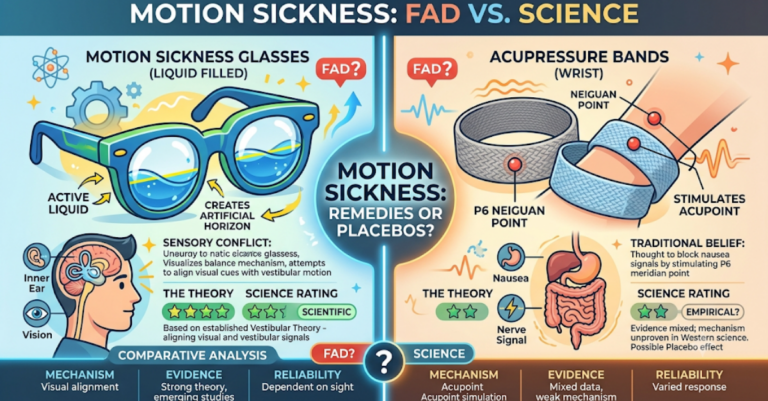
Seasickness is a classic case of a sensory mismatch. Your brain constantly processes data from your eyes, your inner ear (vestibular system), and your physical muscles to figure out where your body is in space.
When you are sitting on a rocking dive boat, your inner ear feels the dramatic up, down, and side-to-side motion of the waves. However, if you are looking down to set up your BCD and regulator, your eyes are fixed on the stationary deck of the boat.
Your eyes tell your brain: “We are sitting still.” Your inner ear screams: “We are on a rollercoaster.” Your brain gets confused by these conflicting signals and assumes you have ingested a toxin. To protect you, it triggers a defensive nausea response to empty your stomach.
Pre-Dive Prevention: Fueling for the Swells
Preventing seasickness starts long before you step onto the boat. How you prep your stomach is critical.
-
Hydrate Strategically: Dehydration makes nausea much worse, and scuba diving naturally dehydrates you. Drink plenty of water the day before and the morning of your dive.
-
Eat a “Bland and Neutral” Breakfast: Do not dive on an empty stomach, as excess stomach acid will quickly cause churning. Avoid greasy bacon, heavy dairy, and highly acidic citrus fruits. Instead, eat dry toast, oatmeal, or a plain banana about an hour before departure.
-
Skip the Party: Avoid alcohol and heavy caffeine the night before a dive. Both dehydrate you and make your vestibular system hyper-sensitive to motion.
On-Board Tactics: How to Trick Your Brain
Once you are on the boat, use these physical strategies to keep your nervous system calm and your senses aligned.
1. Prep Your Gear at the Dock
Looking down to assemble your gear while the boat is rocking is the number one trigger for diver seasickness. Assemble your tank, BCD, and regulator while the boat is still tied securely to the calm dock. Once underway, your only job should be relaxing.
2. Find the “Sweet Spot” on the Boat
Avoid the bow (the front of the boat), which violently slams up and down with every wave, and the upper deck, which sways aggressively side-to-side. The most stable place on any boat is at the lowest level, dead center (midship). Sit there and let the hull absorb the worst of the motion.
3. Lock Eyes on the Horizon
Never look down at your phone or read a book on a dive boat. Keep your eyes firmly locked on the distant horizon. This gives your visual system a stable anchor, aligning what your eyes see with what your inner ear feels.
The Ultimate Safe Fix: The Pisix Band
Many divers instinctively reach for over-the-counter motion sickness pills like Dramamine. For scuba divers, this is a massive risk. Traditional anti-nausea pills cause heavy drowsiness, delayed reaction times, and brain fog. At depth, this drowsiness can impair your judgment, mask decompression issues, or dangerously amplify the effects of nitrogen narcosis.
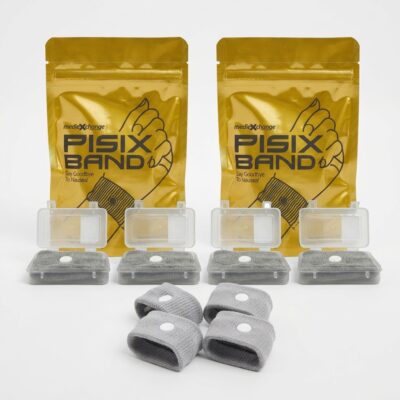
For safe, completely non-drowsy relief, strap on a pair of Pisix Bands before you leave the dock.
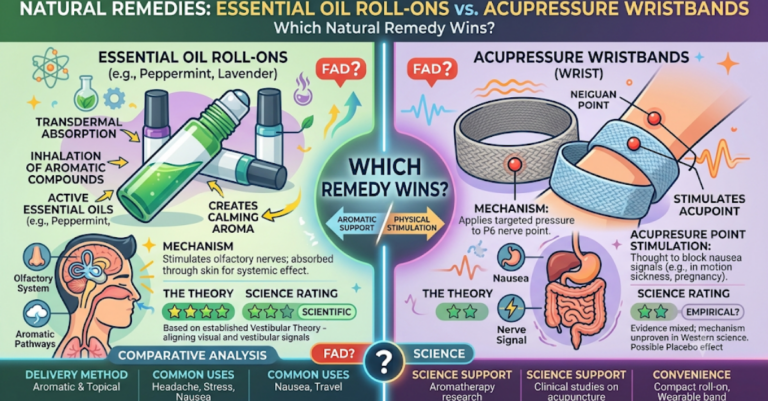
The Pisix Band is a drug-free, soft cotton wristband that uses the proven science of acupressure to settle your stomach. It features a built-in stud that applies gentle, continuous pressure to the Nei-Kuan (P6) acupressure point on your inner forearm.
Stimulating this specific nerve pathway actively blocks the nausea signals traveling from your confused brain to your gut.
-
100% Drug-Free: No chemicals mean no drowsiness, keeping your mind sharp and your dive profile safe.
-
Continuous Relief: Because it is sold and worn as a pair, you get maximum, balanced nerve stimulation.
-
Wetsuit Compatible: The low-profile, stretchable cotton design means you can easily slide your wetsuit sleeves right over them and wear them throughout the entire dive.
What If You Get Sick Underwater?
Even with the best preparation, a sudden ocean surge can sometimes trigger nausea while you are submerged. If you feel the urge to vomit underwater, do not panic and do not take your regulator out of your mouth.
Modern scuba regulators are designed to handle vomit. Simply hold the second stage firmly against your mouth, throw up directly into the mouthpiece, and then press the purge button to clear the debris. Take a few slow, calming breaths, signal your buddy, and safely end the dive if you still feel ill.