Nausea rarely gives you a warning. Whether it is triggered by a sudden wave of motion sickness, an anxiety spike, a migraine, or a lingering stomach bug, a nausea attack commands your complete attention. The room feels hot, your mouth waters, and panic immediately sets in.
Unfortunately, that panic is the absolute worst thing for your stomach. When you feel sick and start to hyperventilate or take shallow, rapid breaths, you are actively telling your nervous system that you are in danger, which makes stomach spasms significantly worse.
If you want to stop a nausea attack in its tracks without relying on heavy, drowsiness-inducing medication, you have to hit the “override” switch on your nervous system. The fastest way to do that is through intentional breathing. Here is the science behind why it works, and the three best breathing exercises to settle your stomach instantly.
The Science: Why Breathing Cures a Churning Stomach
To understand why a simple breath can stop you from throwing up, you need to look at the vagus nerve.
The vagus nerve is the main neural superhighway that connects your brain to your digestive tract. It controls your parasympathetic nervous system—often called the “rest and digest” mode.
When a nausea attack hits, your body is usually thrown into “fight-or-flight” mode. Your heart rate spikes, your muscles tense, and your digestion completely shuts down, causing your stomach to spasm. By taking slow, deep, intentional breaths, you physically stimulate the vagus nerve. This instantly lowers your heart rate and sends a powerful chemical signal to your brain that says: “We are safe. You can turn the digestion back on.” As the vagus nerve activates, the stomach muscles relax, and the urge to vomit fades.
3 Breathing Exercises for Instant Nausea Relief
The next time you feel a wave of nausea building, stop what you are doing, close your eyes, and try one of these three targeted techniques:
1. The 4-7-8 Method (Best for Anxiety-Induced Nausea)
Pioneered as a natural tranquilizer for the nervous system, the 4-7-8 method forces your heart rate to slow down by extending your exhale.
-
How to do it:
-
Exhale completely through your mouth, making a gentle “whoosh” sound.
-
Close your lips and inhale quietly through your nose to a mental count of 4.
-
Hold your breath for a count of 7.
-
Exhale completely through your mouth to a count of 8.
-
Repeat this cycle four times.
2. Box Breathing (Best for Motion Sickness)
Used by Navy SEALs to stay calm in high-stress situations, box breathing is incredibly grounding. If you are stuck in the back of a taxi or hitting turbulence on a flight, this technique gives your brain a specific pattern to focus on instead of the dizzying motion.
-
How to do it:
-
Inhale slowly through your nose for a count of 4.
-
Hold your breath at the top for a count of 4.
-
Exhale smoothly through your mouth for a count of 4.
-
Hold your lungs empty at the bottom for a count of 4.
-
Repeat until the spinning sensation stops.
3. Diaphragmatic “Belly” Breathing (Best for Stomach Cramps)
When we are stressed or nauseous, we tend to take shallow “chest breaths.” Belly breathing pulls oxygen deep into the lowest parts of your lungs, which physically massages your stomach and intestines, easing the spasms that lead to vomiting.
-
How to do it:
-
Place one hand on your chest and the other directly over your belly button.
-
Breathe in deeply through your nose. The hand on your chest should remain completely still, while the hand on your belly should rise as your stomach expands like a balloon.
-
Exhale slowly through pursed lips, feeling your stomach gently deflate.
Supercharge Your Relief: Breathing + Acupressure
Breathing exercises are highly effective for acute, sudden nausea attacks. But if you are dealing with a lingering issue—like an eight-hour road trip, a day-long migraine, or chronic morning sickness—you need a sustained defense to keep the nausea from returning once you stop actively focusing on your breath.
The ultimate, 100% natural strategy is to pair your vagal breathing with acupressure.
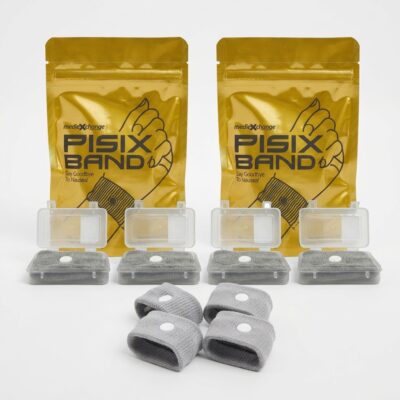
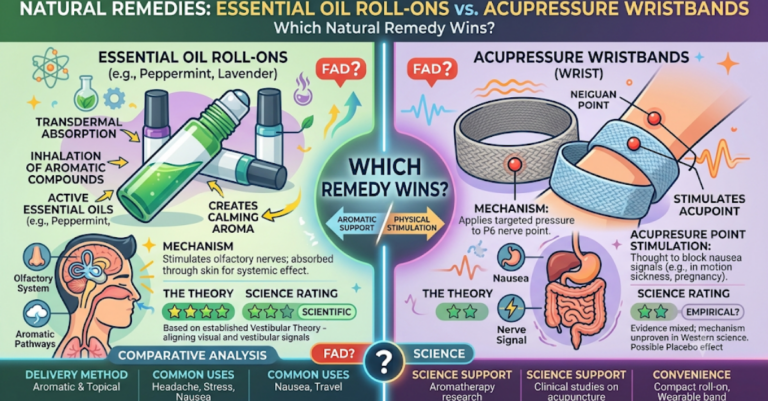
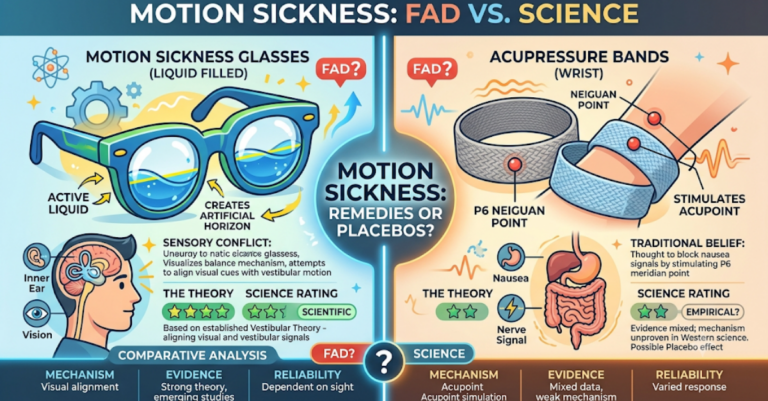
While breathing stimulates the vagus nerve internally, a Pisix Band stimulates the median nerve externally. Made of a soft, highly breathable cotton blend, the Pisix Band features a built-in stud that applies gentle, continuous pressure to the Nei-Kuan (P6) pressure point on your inner forearm.
When you combine the deep relaxation of box breathing with the continuous, anti-nausea nerve blockade of the Pisix Band, you create an impenetrable defense against stomach upset.
Why You Should Keep a Pisix Band Handy:
-
Passive Relief: Once your breathing exercises calm the initial panic, the Pisix Band takes over, providing continuous relief for hours so you can go back to reading, working, or sleeping.
-
Completely Drug-Free: There are no chemical side effects, no drowsiness, and no brain fog.
-
Fast-Acting: You can slip the stretch-fit bands onto your wrists the exact moment you start your 4-7-8 breathing routine, allowing both natural remedies to work in perfect synchronization.