🎉 FREE shipping + Cash on Delivery on every order · Dispatch in 24 hrs
🎉 FREE shipping + COD · Dispatch in 24 hrs
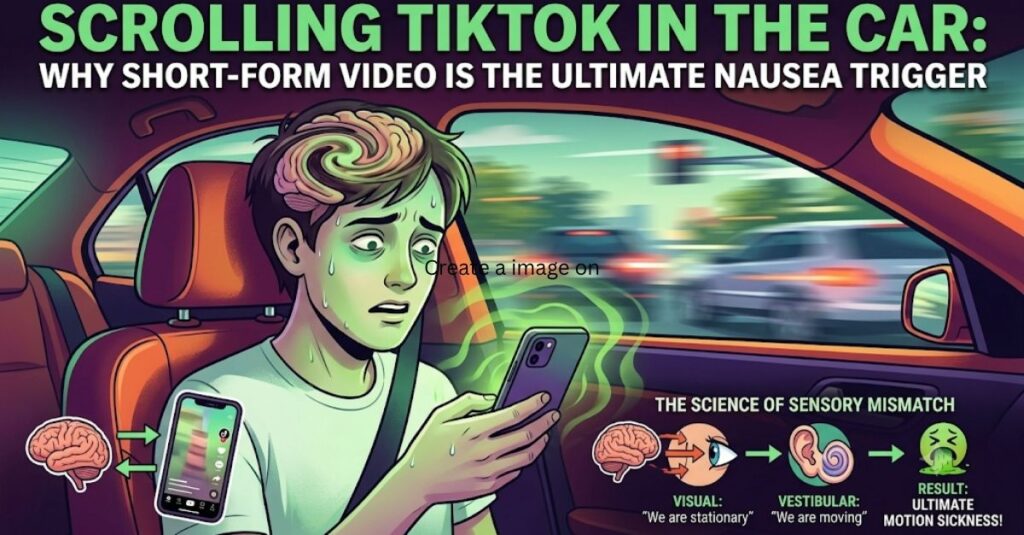
You are sitting in the passenger seat of an Uber, navigating stop-and-go traffic. You pull out your phone, open TikTok or Instagram Reels, and start swiping. Within three or four short videos, the familiar symptoms hit: a sudden cold sweat, a dull tension headache, and a deeply churning stomach.
Reading a book in the car has always been a known trigger for motion sickness, but short-form video apps take the nausea to an entirely new, aggressive level.
If you find yourself getting instantly dizzy while trying to catch up on your feed during a commute, you are battling a massive biological glitch. Here is the science behind why scrolling short-form video in a moving vehicle is the ultimate nausea trigger, and how to stop the spin.
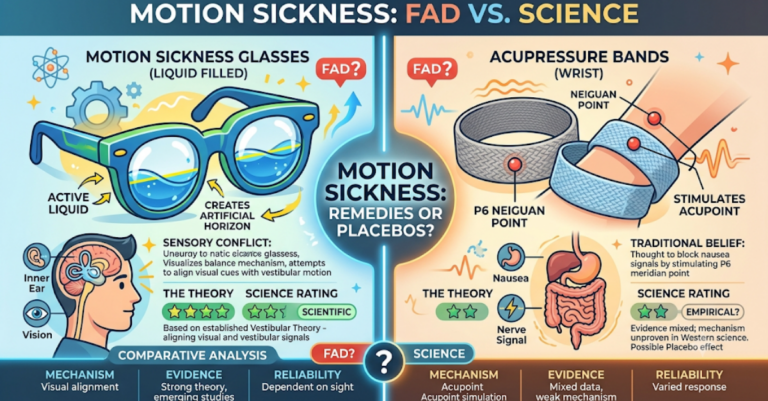
All car sickness is rooted in a sensory mismatch. Your inner ear (the vestibular system) feels the physical bumps, turns, and acceleration of the car. However, when you look down at your phone, your eyes tell your brain that you are looking at a static object and are therefore sitting perfectly still. Your brain panics at this conflicting data, assumes you are hallucinating due to a neurotoxin, and triggers a nausea response to expel the “poison.”
But why is a short-form video feed so much worse than reading an email or a Kindle book?
It comes down to optokinetic nystagmus—the biological reflex that controls how your eyes track movement.
When you read a book, your eyes track smoothly from left to right. When you scroll TikTok, your visual environment is constantly, violently changing. Every time you swipe up, your eyes have to snap to the new video, immediately refocus, and start tracking fast-moving elements (like dancing, quick jump cuts, and flashing text overlays).
Your eye muscles are working incredibly hard to track this chaotic digital motion while your inner ear is simultaneously dealing with the physical motion of the car. This dual-processing overloads your central nervous system in record time, leading to near-instant visual fatigue and dizziness.
Short-form videos are engineered for rapid dopamine hits. To keep your attention, creators use aggressive jump cuts, loud sudden audio drops, and high-contrast visuals.
This creates a high cognitive load. Your brain is processing a massive amount of sensory data every few seconds. When you add the physical stress of maintaining balance in a moving vehicle to this heavy digital processing, your nervous system simply hits its limit.
Furthermore, the bright blue light and harsh screen glare in a slightly darker car cabin force your pupils to constantly constrict and dilate. This accelerates eye strain, triggering the tension headaches that almost always precede a wave of nausea.
Watch how this sensory conflict plays out biologically, and why modern tech is struggling to keep up with our nervous system:
Key insight: Apple’s recent introduction of “Vehicle Motion Cues” (animated dots on the edge of the screen that move opposite to the car’s motion) is a direct attempt to combat this exact biological glitch by giving the peripheral vision a moving anchor.
If you must use your phone during a car ride, you have to actively manage your visual anchors.
Elevate Your Screen: Never look down into your lap. Hold your phone up at eye level. This allows your peripheral vision to see the passing trees and the road outside the window. Giving your brain a real-world visual anchor helps it reconcile the physical motion your inner ear is feeling.
Turn Down the Brightness: Lowering your screen brightness reduces the harsh contrast between the phone and the car cabin, significantly delaying the onset of eye strain and tension headaches.
The 2-Minute Rule: Do not doomscroll continuously. Look at your phone for no more than two minutes, then look out the front windshield at the distant horizon for 30 seconds to let your inner ear and eyes resynchronize.
Adjusting your screen habits helps, but if you have a highly sensitive stomach, it often isn’t enough to stop the nausea once it begins. Taking traditional motion sickness pills to survive a commute will leave you heavily sedated with severe brain fog, ruining your productivity for the rest of the day.
For fast, clear-headed relief, acupressure is the ultimate everyday carry item.
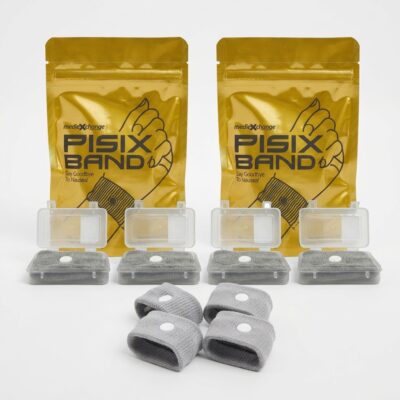
By wearing a Pisix Band, you can safely hit the override switch on your nervous system. Brought to you by Mediexchange, the Pisix Band features a built-in precision stud that applies continuous, gentle pressure to the Nei-Kuan (P6) acupressure point on your inner forearm.
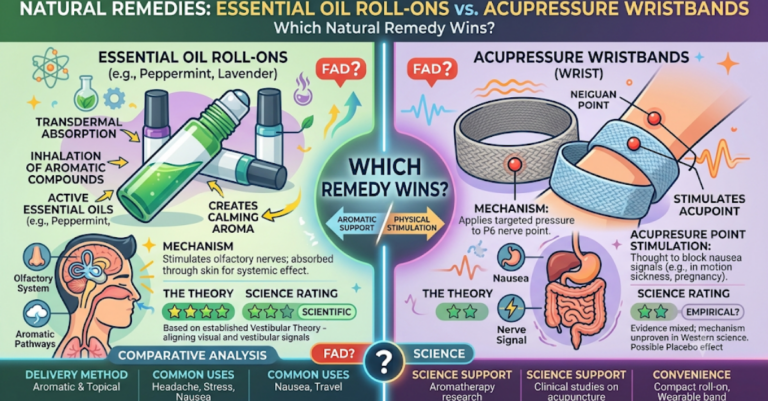
Stimulating this specific median nerve sends a steady, grounding signal directly to your central nervous system. This physical touch signal actively blocks the nausea-inducing distress signals triggered by the chaotic sensory mismatch of your smartphone.
100% Drug-Free: Because it is a non-sterile wellness product, it does not require Class A medical device registration. You get highly effective, safe relief without any of the drowsy side effects of chemical antihistamines.
Zero Brain Fog: You retain your sharp focus, meaning you can check your emails, scroll your feeds, and step out of the car ready to tackle your day.
Highly Accessible Logistics: Packaged efficiently in a compact 16.5x10x2 cm box, the bands are easy to keep in your laptop bag or purse. Whether you order nationally via Amazon FBA or grab them locally through 10-minute quick-commerce apps like Blinkit right here in Indore, keeping your stomach settled is easier than ever.