You have visited the doctor, checked your blood pressure, and made sure you are drinking enough water, but that unshakeable feeling of dizziness or vertigo keeps creeping back. If your world occasionally feels like it is spinning and you cannot pinpoint a travel-related or viral trigger, the root cause might be hiding in plain sight on your dinner plate.
Magnesium is responsible for over 300 biochemical reactions in the human body, yet nearly half of the adult population does not get enough of it. While most people associate a lack of magnesium with muscle cramps or poor sleep, severe deficiency can directly disrupt your central nervous system and your inner ear.
Here is the biological breakdown of why a lack of this crucial mineral makes you dizzy, and how you can naturally stabilize your system.
The Biology: How Magnesium Controls the Spin
To understand why a mineral deficiency causes vertigo, you have to look at how your brain and inner ear communicate.
Your vestibular system (the balance center in your inner ear) relies on a constant, precise exchange of electrical signals to tell your brain exactly where you are in space. This electrical signaling is controlled by two primary minerals: calcium and magnesium.
The Calcium Gatekeeper
Calcium excites your nerve cells, causing them to fire off signals. Magnesium acts as the biological “gatekeeper” or relaxant. It sits on the receptors of your nerve cells and physically blocks calcium from entering when the nerve is supposed to be at rest.
When you are deficient in magnesium, that gate is left wide open. Calcium floods into your vestibular nerve cells, causing them to become hyperactive and fire off continuous, chaotic signals to your brain.
Your brain receives these frantic signals and assumes your head is moving or spinning, even when you are sitting perfectly still on the couch. This neurological misfire is what causes the sudden, unexplained waves of dizziness, lightheadedness, and nausea.
3 Signs Your Dizziness is Magnesium-Related
How do you know if your vertigo is caused by a deficiency rather than a standard inner-ear issue? Look for these compounding symptoms that almost always accompany low magnesium levels:
-
Muscle Twitches and Cramps: Because magnesium relaxes muscles, a lack of it leads to involuntary eye twitches, restless legs, and severe calf cramps at night.
-
Frequent Tension Headaches: Hyperactive nerve cells and constricted blood vessels (both caused by low magnesium) are primary triggers for chronic migraines and tension headaches.
-
Brain Fog and Fatigue: If your dizziness is paired with a heavy, lethargic feeling and an inability to focus, your central nervous system is likely struggling to produce adequate cellular energy without enough magnesium.
How to Restore Your Levels
Fixing a magnesium deficiency requires a two-pronged approach.
First, look at your diet. Magnesium is abundant in dark leafy greens (like spinach and Swiss chard), pumpkin seeds, almonds, and avocados.
Second, consider a high-quality supplement. However, avoid Magnesium Oxide, as it has a terrible absorption rate and primarily acts as a laxative. If you want to target dizziness and neurological health, look for Magnesium Glycinate or Magnesium L-Threonate, as these forms easily cross the blood-brain barrier to calm hyperactive nerve cells.
The Immediate Fix: Managing the Nausea Now
Dietary changes and supplements are fantastic long-term solutions, but building your magnesium reserves back to optimal levels can take weeks. If you are actively dealing with a wave of dizziness and the accompanying nausea right now, you need immediate relief to get through your day.
Because your hyperactive nerves are already over-firing, the last thing you want to do is introduce drowsy, chemical antihistamine pills that will only worsen your brain fog.
For fast, clear-headed relief while you work on your mineral balance, acupressure is the ultimate everyday tool.
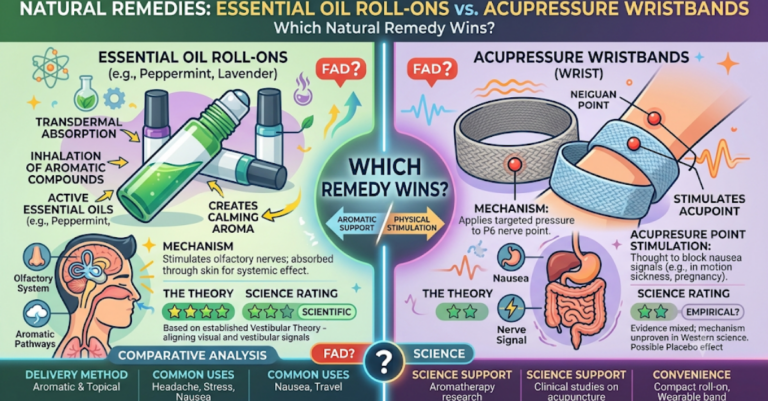
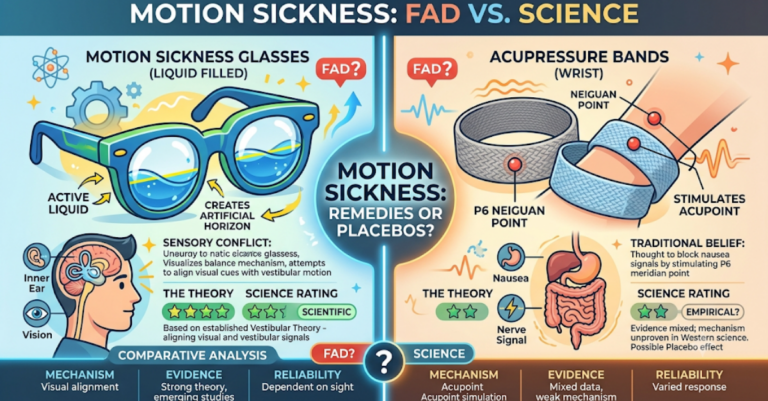
By wearing a Pisix Band, you can safely hit the override switch on your nervous system. Brought to you by Mediexchange, the Pisix Band features a built-in precision stud that applies continuous, gentle pressure to the Nei-Kuan (P6) acupressure point on your inner forearm.
Stimulating this specific median nerve sends a steady, grounding signal directly to your central nervous system. This physical touch signal actively blocks the chaotic, nausea-inducing distress signals triggered by your hyperactive vestibular nerves.
-
100% Drug-Free: As a non-sterile wellness product that does not require Class A medical device registration, it provides highly effective, accessible relief without any of the drowsy side effects of chemical medications.
-
Zero Brain Fog: You retain your sharp focus, meaning you can continue working, commuting, or managing your day without feeling sedated.
-
Highly Accessible Logistics: Packaged efficiently in a compact 16.5x10x2 cm box, the bands are easy to keep in your desk drawer or purse. Whether you order nationally or grab them locally through quick-commerce delivery apps, keeping your stomach settled and your head clear is easier than ever.