🎉 FREE shipping + Cash on Delivery on every order · Dispatch in 24 hrs
🎉 FREE shipping + COD · Dispatch in 24 hrs
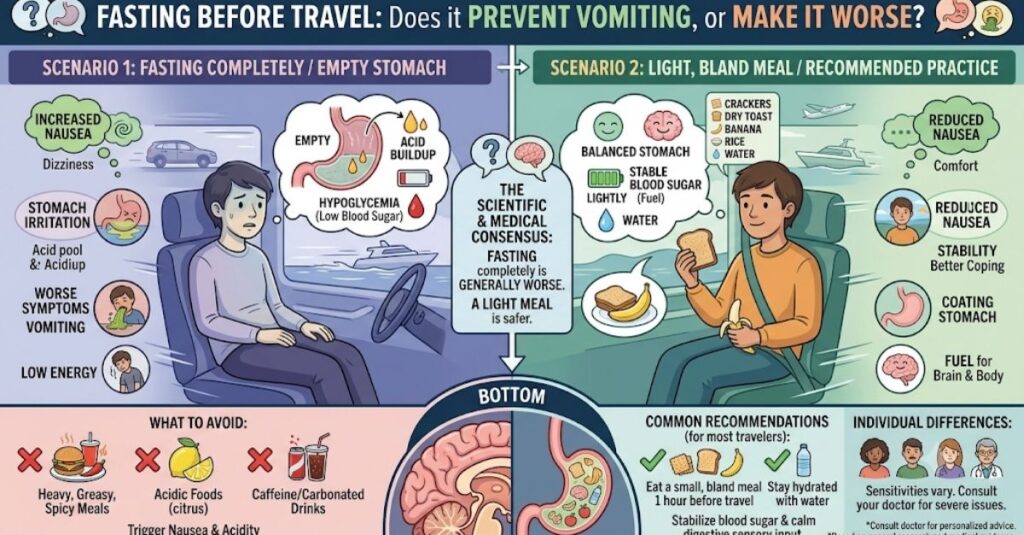
If you suffer from severe car sickness or seasickness, the logic seems perfectly sound: if there is nothing in your stomach, you can’t throw up. Right?
Driven by this logic, many travelers deliberately skip breakfast before a morning flight or fast for hours before a long road trip, hoping that an empty stomach will act as an insurance policy against vomiting.
However, gastroenterologists and travel medicine experts strongly advise against this. Starving yourself before a bumpy ride is actually one of the worst things you can do. Here is the biological truth about why an empty stomach makes motion sickness significantly worse, and what you should actually do to prepare your digestive system for travel.
To understand why fasting backfires, you have to understand how motion sickness works. Nausea is not caused by having food in your stomach; it is a neurological reaction to a sensory mismatch.
When your eyes look at a stationary object inside the car but your inner ear feels the bumps of the road, your brain panics. It assumes you are hallucinating because you have ingested a neurotoxin. To save your life, it sends a distress signal down the vagus nerve to your stomach, commanding it to spasm and expel the “toxin.”
If your brain decides it is time to trigger the vomit reflex, an empty stomach will not stop it. In fact, fasting amplifies the distress for three biological reasons:
Unbuffered Stomach Acid: Your stomach continuously produces gastric acid. Without food to absorb and buffer this acid, it sloshes against your stomach lining as the vehicle moves. This physical irritation makes your stomach hyper-sensitive to any distress signals coming from your brain.
Aggressive Muscle Spasms: When the vagus nerve commands your stomach to spasm, having a small amount of food inside gives those muscles something to grip and process. An empty stomach spasms against itself, leading to painful “dry heaves” that are often far more exhausting and uncomfortable than actually throwing up.
Blood Sugar Drops: Fasting causes your blood sugar to plummet. Low blood sugar naturally induces dizziness, cold sweats, and a lightheaded feeling—the exact same early warning signs of motion sickness. This severely lowers your overall nausea threshold, meaning it takes a much smaller sensory mismatch to trigger a full-blown attack.
You should not travel on a completely empty stomach, but eating a massive, greasy fast-food breakfast is equally disastrous. Heavy, fat-rich meals drastically slow down gastric emptying, leaving food stagnant in your digestive tract and ripe for rejection.
The goal is to find the middle ground: a light, easily digestible “buffer” meal consumed 45 to 60 minutes before departure.
Bland Carbohydrates: Saltines, dry toast, plain oatmeal, or a banana are perfect. They absorb excess stomach acid without requiring heavy digestive processing.
Hydration: Drink clear, cool water. Avoid highly acidic orange juice or dairy-heavy lattes, which can curdle or irritate the stomach lining during turbulence.
Skip the Spices: Avoid hot sauces or heavily spiced curries right before a trip, as these relax the esophageal sphincter and promote acid reflux.
Prepping your stomach with a light meal sets a solid foundation, but it won’t stop your inner ear from getting confused by a winding mountain road. If you want to confidently travel without the heavy drowsiness and brain fog of chemical antihistamine pills, you need to block the brain’s panic signal before it ever reaches your gut.
The most effective, drug-free way to intercept this distress signal is acupressure.
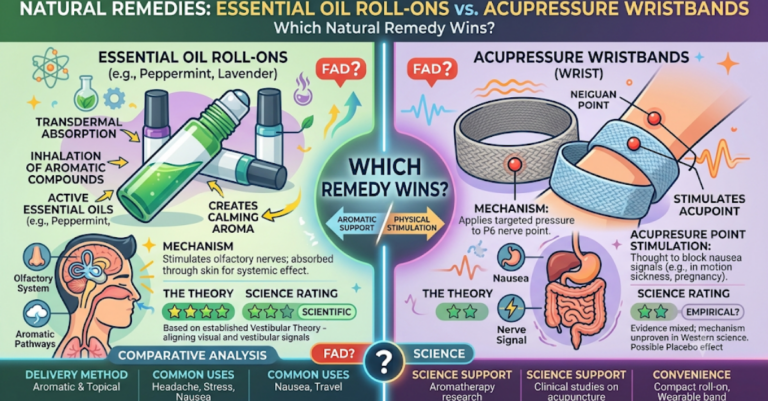
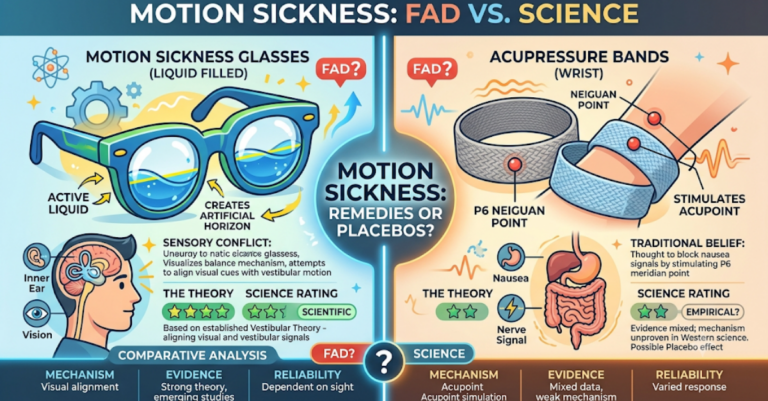
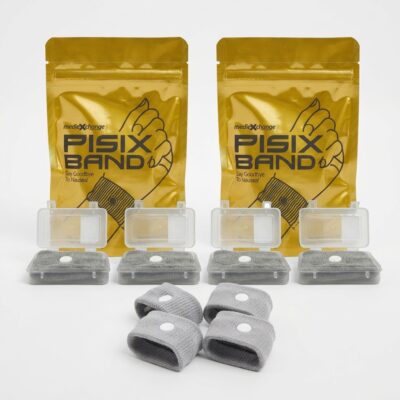
By wearing a Pisix Band, you can safely hit the override switch on your nervous system. Marketed by Mediexchange, this stretch-fit cotton wristband features a built-in precision stud that applies continuous, gentle pressure to the Nei-Kuan (P6) acupressure point on your inner forearm.
Stimulating this specific median nerve sends a steady, rhythmic touch signal directly to your central nervous system. Because the brain prioritizes this physical touch, it essentially “closes the gate” on the vagus nerve, blocking the nausea-inducing sensory mismatch of flying or driving.
Zero Brain Fog: Because the relief is 100% chemical-free, you retain your sharp focus and energy. You can enjoy your vacation or head straight into a business meeting without feeling sedated.
Highly Accessible: Because the Pisix Band is a simple, non-sterile wellness product, a Class A medical device registration is not required. You get safe, clinical-grade relief without the hassle of a prescription.
Built for the Road: Engineered for modern logistics, the bands ship efficiently in a compact 16.5x10x2 cm box. Whether you are stocking up nationally via Amazon FBA or grabbing a pair locally through 10-minute quick-commerce apps like Blinkit right here in Indore, you can secure reliable defense for your stomach exactly when you need it.
Fasting before travel is a widely believed myth that only sets your stomach up for failure. By eating a light, bland meal to buffer your gastric acid and relying on the continuous, non-drowsy relief of the Pisix Band, you can quiet the sensory chaos and enjoy the journey with total confidence.