
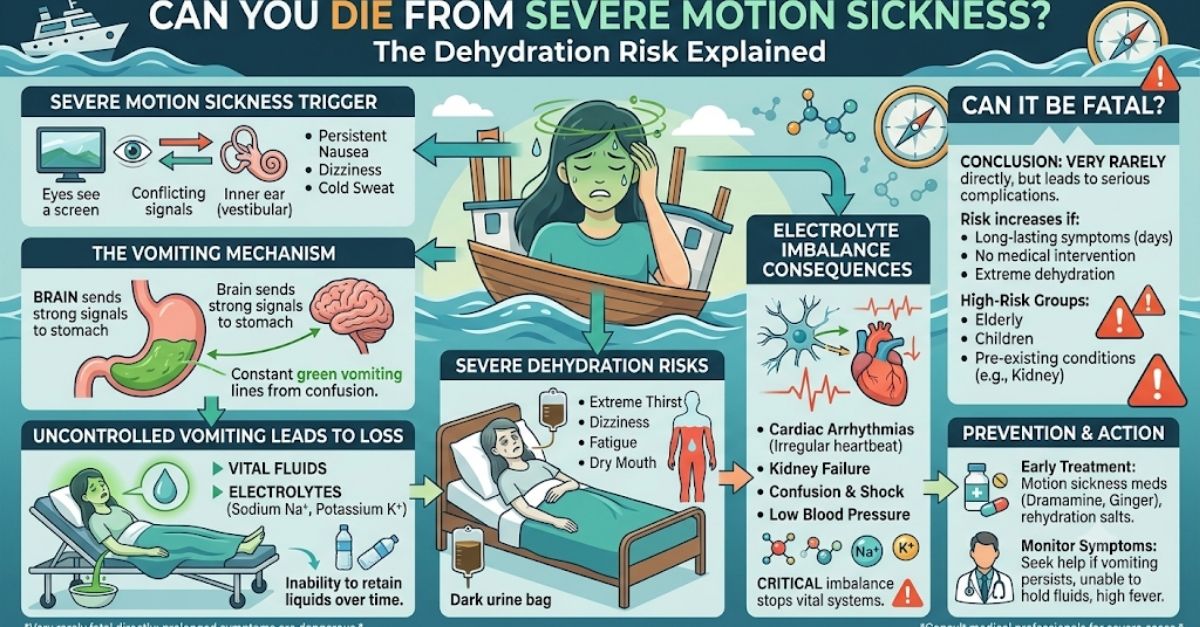
When you are trapped in the cabin of a rocky boat or sitting in the back of a swerving car, severe motion sickness can trigger a cold sweat, uncontrollable shaking, and relentless vomiting. In the middle of an intense nausea attack, your brain is convinced you have been poisoned. It legitimately feels like you are dying.
But can motion sickness actually kill you?
The direct, scientific answer is no: the neurological sensory mismatch that causes motion sickness is not fatal. However, if you are stuck in transit for hours or days (such as on a long cruise), the complications of unrelenting motion sickness can become medically dangerous.
Here is the candid biological truth about why motion sickness feels so life-threatening, the real danger of severe dehydration, and how you can stop the cycle before it starts.
The Biology of the Panic: Why It Feels Fatal
To understand why severe car sickness or seasickness feels like a near-death experience, you have to look at how your brain processes movement.
Motion sickness occurs when your inner ear feels physical movement, but your eyes (staring at a static object) tell your brain you are sitting still. Your brain cannot logically process this violently conflicting data. Evolutionarily, the only time your body should experience this kind of sensory chaos is if you have ingested a deadly neurotoxin.
To save your life, your brain hits the ultimate panic button. It sends a massive distress signal down the vagus nerve, commanding your stomach to forcefully spasm and purge the “poison.” The intense dread, the drop in blood pressure, and the cold sweats are all part of your autonomic nervous system’s desperate attempt to keep you alive. You are not dying; your body is just severely overreacting to a harmless car ride.
The Real Danger: Rapid Dehydration
While the neurological panic will not kill you, the physical purging will rapidly drain your body of critical resources. If you are experiencing severe, continuous vomiting (and occasionally the diarrhea that accompanies vagal nerve panic), the primary medical threat is dehydration.
When you vomit repeatedly, you are not just losing water. You are rapidly depleting your body of vital electrolytes, specifically sodium and potassium.
-
The Potassium Crash: Potassium is required for your heart and muscles to function correctly. When potassium levels drop too low due to continuous vomiting, you will experience severe muscle cramps, extreme lethargy, and a dangerously irregular heartbeat.
-
The Vicious Cycle: As dehydration sets in, your blood volume drops. This reduces oxygen flow to your brain, causing severe dizziness and confusion—which only amplifies the sensory mismatch and makes the nausea worse.
Recognizing the Red Flags
If you are on a long journey, it is critical to know the difference between standard motion sickness and a developing medical emergency.
| Symptom Category | Standard Motion Sickness | Dangerous Dehydration |
| Physical Output | Vomiting 1-3 times | Inability to keep any liquids down for 12+ hours |
| Cognitive State | Brain fog, irritability | Severe confusion, delirium, or fainting |
| Physical Signs | Sweating, pale skin | Sunken eyes, dry mouth, dark or zero urine output |
| Heart Rate | Temporarily elevated | Rapid, fluttering, or irregular heartbeat |
If a traveler exhibits the signs of dangerous dehydration, they require immediate medical intervention and intravenous (IV) fluids to restore their electrolyte balance.
The Ultimate Defense: Stop the Purge Before It Starts
The best way to prevent dangerous dehydration is to intercept the brain’s panic signal before the vomiting ever begins.
Traditional motion sickness pills (like dimenhydrinate) can stop the nausea, but they leave your central nervous system heavily sedated, causing extreme dry mouth and drowsiness that can last for hours. To safely block the sensory panic without chemical side effects, the most effective tool is acupressure.
By wearing a Pisix Band, you can safely hit the override switch on your nervous system. Marketed by Mediexchange, this stretch-fit cotton wristband features a built-in precision stud that applies continuous, gentle pressure to the Nei-Kuan (P6) acupressure point on your inner forearm.
Stimulating this specific median nerve sends a steady, rhythmic touch signal directly to your central nervous system. Your brain prioritizes this physical touch over the chaotic signals coming from your inner ear. This physical anchor essentially “closes the gate” on the vagus nerve, preventing the nausea-inducing panic from ever reaching your stomach.
Why Acupressure is Your Safest Travel Companion
-
100% Chemical-Free: You get powerful, reliable defense without any sedating side effects. You can step off a boat or out of a car fully alert and hydrated.
-
Safe & Accessible: As a non-sterile wellness product, it does not require registration as a Class A medical device. You get clinical-grade, drug-free relief without needing a medical prescription.


