
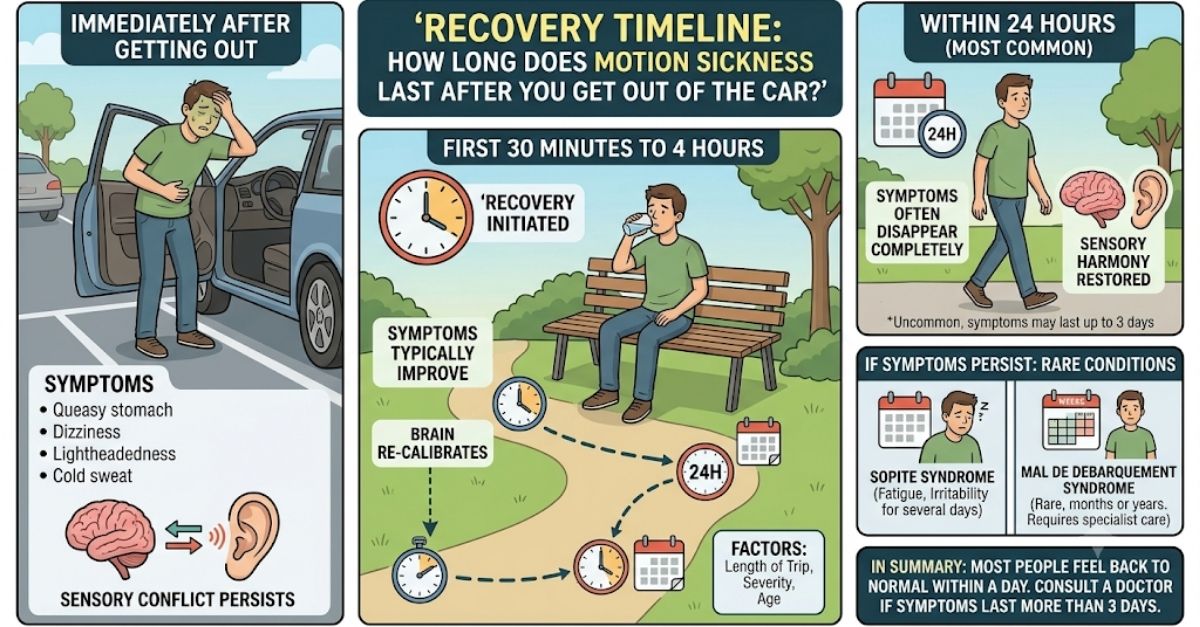
You finally made it. The car is parked, the engine is off, and your feet are planted firmly on solid ground. You survived the winding mountain roads or the endless stop-and-go traffic. But as you step onto the sidewalk, you realize the nightmare isn’t over. Your head is still spinning, your stomach is in knots, and the pavement feels like it’s swaying.
Getting out of the vehicle stops the physical movement, but for many people, the symptoms of motion sickness linger long after the trip ends. This post-travel hangover is exhausting, but it is completely normal.
Here is the biological breakdown of why you still feel dizzy on solid ground, how long it usually takes for the nausea to fade, and what you can do to speed up your recovery.
The Biological Hangover: Why It Lingers
Motion sickness is caused by a sensory mismatch. While you were in the car, your inner ear (the vestibular system) felt the physical bumps and turns, but your eyes (looking at a phone or the seat in front of you) told your brain you were sitting perfectly still.
When your brain receives this violently conflicting data, it panics. It assumes you have ingested a neurotoxin and floods your central nervous system with histamine, triggering the vagus nerve to spasm your stomach so you can expel the “poison.”
When you finally step out of the car, the physical motion stops, but your body is still dealing with the biological aftermath:
-
The Histamine Flood: Your bloodstream is still heavily saturated with the stress chemicals and histamines released during the ride. It takes time for your liver and kidneys to filter these out.
-
Vestibular Momentum: The fluid in your inner ear that tracks balance doesn’t always settle instantly. If you were on a highly turbulent ride, the microscopic hair cells in your ear remain hyper-sensitive, creating a residual “rocking” sensation known clinically as Mal de Débarquement.
-
Gastric Spasms: Your stomach muscles have been aggressively clenching. Even after the neurological panic signal stops, those muscles remain tense and inflamed, leading to lingering nausea and bloating.
The Timeline: When Will the Spinning Stop?
Because the recovery process depends on filtering chemicals and calming inflamed nerves, the timeline varies heavily based on the severity of the sensory mismatch and your individual biology.
-
Mild Car Sickness: If you just felt a little flushed and dizzy after reading a text message in the backseat, stepping out into fresh air usually clears the symptoms in 15 to 30 minutes.
-
Moderate to Severe Nausea: If you reached the point of cold sweats, extreme dizziness, or actual vomiting, your central nervous system is highly inflamed. In these cases, the “motion hangover” typically lasts anywhere from 2 to 4 hours after you stop moving.
-
The Extreme Cases: In rare instances (most commonly after long boat rides, but occasionally after grueling road trips), the residual rocking sensation and lethargy can last 12 to 24 hours.
3 Ways to Speed Up Recovery
You do not have to just sit on the couch and wait for the room to stop spinning. You can actively help your nervous system recalibrate.
1. Establish a True Visual Anchor
Do not immediately look down at your phone when you get out of the car. Find a distant, stationary object (like a building or a tree on the horizon) and stare at it. This forces your eyes and your inner ear to finally agree that the world is absolutely still, helping to instantly quiet your vestibular system.
2. Hydrate and Cool Down
Sip ice-cold water—do not chug it, as a rapid influx of liquid can shock your already-sensitive stomach. Splash cold water on your face and the back of your neck. The sudden drop in temperature stimulates the mammalian dive reflex, which activates the vagus nerve to slow your heart rate and physically calm your stomach spasms.
3. Eat Bland, Starchy Carbs
Once the severe nausea has peaked, nibble on a few plain crackers, a slice of dry white toast, or a banana. These bland carbohydrates require almost zero digestive energy and act like a biological sponge, soaking up the excess, highly acidic gastric fluids sloshing around in your stomach.
The Ultimate Defense: Stop It Before It Starts
Recovering from car sickness is miserable, and taking traditional antihistamine pills before a ride will only trade your nausea for extreme drowsiness and brain fog. If you want to step out of the car feeling completely fine, you need to block the sensory panic before it starts, without using heavy chemicals.
The most effective, drug-free way to intercept the distress signal is acupressure.
By wearing a Pisix Band, you can safely hit the override switch on your nervous system. Brought to the market by Mediexchange, this comfortable, stretch-fit cotton wristband features a built-in precision stud. This stud applies continuous, gentle pressure to the Nei-Kuan (P6) acupressure point on your inner forearm.
Stimulating this specific median nerve sends a steady, rhythmic touch signal directly to your central nervous system. Because your brain prioritizes this constant physical touch over the chaotic signals coming from your inner ear, it essentially “closes the gate” on the vagus nerve, preventing the nausea panic from ever triggering.
Why the Pisix Band is Your Best Travel Companion:
-
100% Drug-Free: You get powerful, reliable defense without any drowsy side effects. You can step out of the car completely alert and ready for your day.
-
Zero Clinical Hassle: As a non-sterile wellness product, it does not require registration as a Class A medical device. You get safe, immediate relief without the need for a prescription.


