
If you have ever felt your stomach drop while reading in the passenger seat, you have probably been offered a variety of strange folk remedies. Among the most popular—and surprising—is a simple slice of lemon.
It sounds like an old wives’ tale: suck on a lemon wedge, and your nausea will magically disappear. Yet, thousands of travelers swear by it. As it turns out, this classic trick isn’t just a placebo. There is real, biological science behind why a burst of sour citrus can rapidly settle an upset stomach.
Here is exactly what happens in your body when you suck on a lemon, and how you can use sensory hacks to survive a bumpy ride.
The Biological Shock of Sour
Motion sickness is caused by a sensory mismatch. Your inner ear feels the physical movement of the car or boat, but your eyes (staring at a phone or the dashboard) tell your brain you are sitting still.
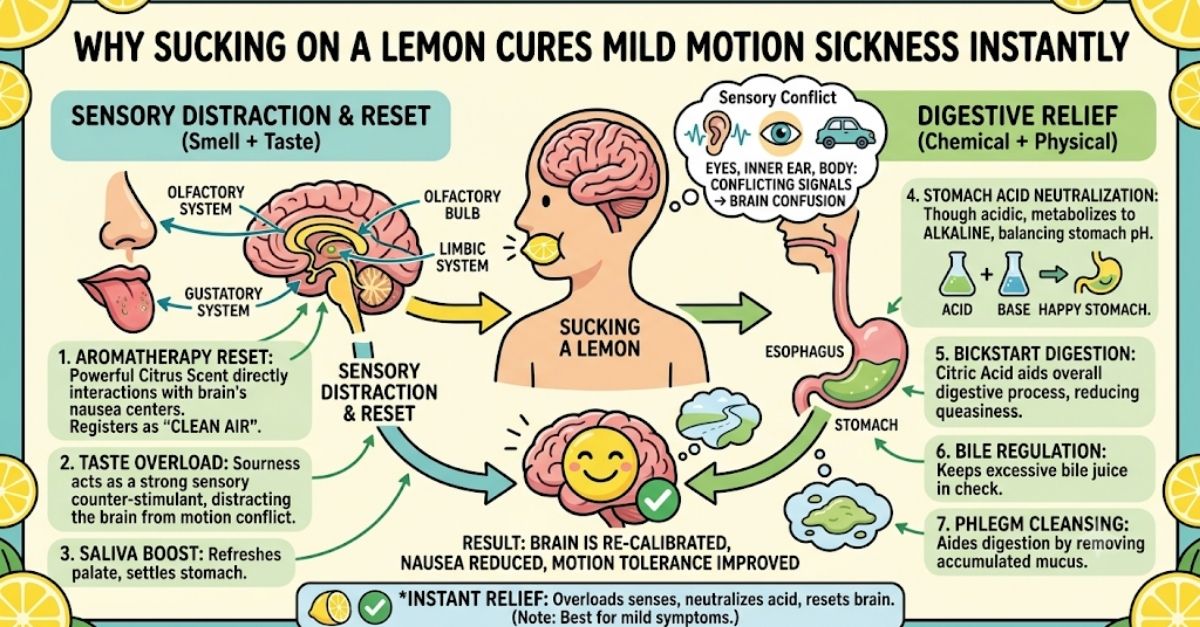
When your brain receives this conflicting data, it gets confused, hits the panic button, and sends a distress signal down the vagus nerve to your stomach. To stop the nausea, you have to distract the brain from that sensory panic. A lemon does this brilliantly through three distinct biological pathways:
1. The Saliva Override
When nausea peaks, your autonomic nervous system often triggers a sudden rush of thick, unpleasant saliva (known as “water brash”) right before you throw up.
When you bite into a lemon, the intense sourness forces your salivary glands into overdrive, producing a massive rush of fresh, thin saliva. Swallowing this fresh saliva neutralizes lingering stomach acid and signals to your digestive tract that you are eating, which actively suppresses the vomiting reflex.
2. Olfactory Cleansing
The smell of a cramped car—stale air, synthetic air fresheners, or exhaust—can rapidly accelerate nausea. The scent of lemon is sharp, clean, and highly volatile. When you inhale the citrus oils from the lemon peel, they travel directly to the olfactory bulb in your brain, cutting through the stagnant air and calming the emotional center (the amygdala) that controls panic and nausea.
3. The Sensory Distraction
The sheer intensity of a sour lemon acts as a neurological reset. The sharp, puckering sensation on your tongue commands your central nervous system’s immediate attention. For a brief window, your brain is so focused on processing the extreme sour flavor that it temporarily stops obsessing over the confusing signals coming from your sloshing inner ear.
When the Lemon Runs Out
Sucking on a lemon is a fantastic, rapid-response tool for mild nausea. However, it has a major limitation: it is a temporary distraction.
Once the sour flavor fades, your inner ear is still dealing with the physical movement of the vehicle. If you are only twenty minutes into a four-hour road trip, relying on a bag of lemons to get you to your destination is going to leave you with severe acid reflux and damaged tooth enamel.
To keep your stomach settled for the long haul, you need a defense mechanism that continuously intercepts the brain’s panic signals without requiring you to constantly eat.


