
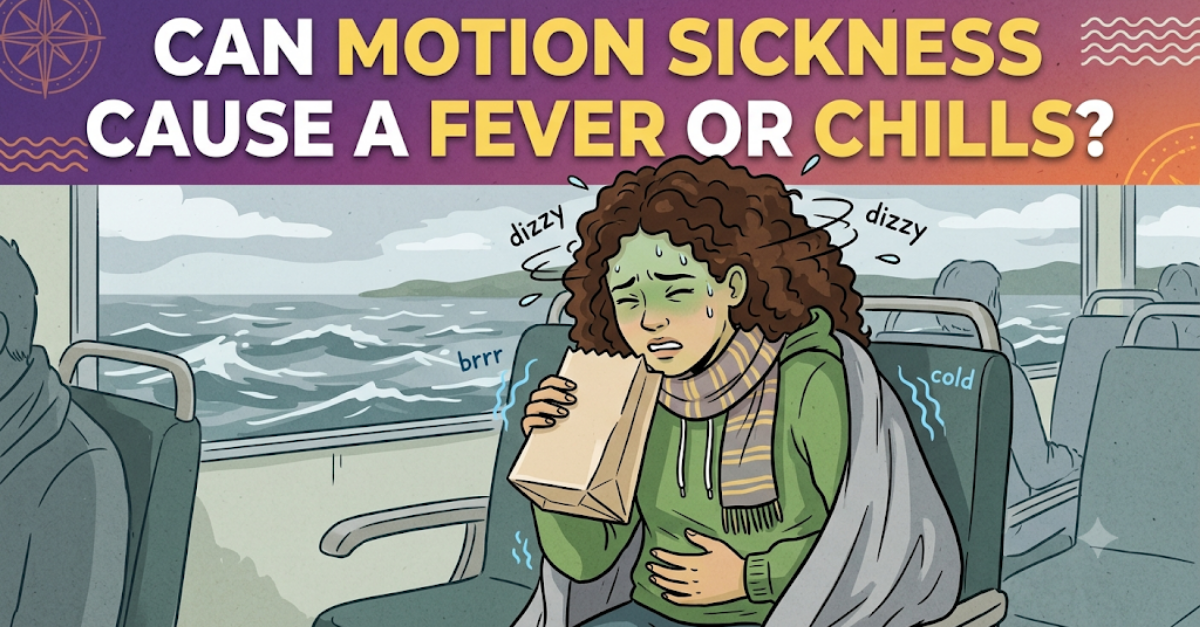
When you are strapped into the backseat of a swerving car or enduring a choppy ferry ride, the symptoms of motion sickness can hit like a freight train. Within minutes, your stomach drops, your head spins, and a sudden, freezing shiver runs down your spine. Your skin becomes clammy, and you might even start to visibly shake.
Because the physical reaction is so intense, many people mistake severe motion sickness for a sudden stomach bug or the flu. But can a bumpy ride actually give you a fever, or are those chills purely neurological?
If you are trying to figure out whether you need a doctor or just a breath of fresh air, here is the clear biological breakdown of how motion sickness alters your body temperature.
The Short Answer: Chills Yes, Fever No
To properly treat your symptoms, it is critical to separate a true fever from a “cold sweat.”
Motion sickness is a neurological reaction to a sensory mismatch (your eyes and inner ear sending conflicting data to your brain). It is an issue with your central nervous system, not your immune system.
-
Fever: A true fever is a biological immune response. Your body deliberately raises its internal core temperature to kill off invading bacteria or a virus. Motion sickness cannot cause a fever. If a thermometer shows your core temperature is above 100.4°F (38°C), you are fighting a pathogen, not a bumpy road.
-
Chills & Cold Sweats: A sudden, freezing chill is a hallmark symptom of motion sickness. It is caused by an autonomic nervous system panic, not an infection.
The Biology of the Cold Sweat
Why does your brain make you feel like you are freezing when you get car sick? It comes down to your body’s “fight or flight” response.
When your brain receives violently conflicting sensory data from your eyes and inner ear, it panics. Assuming you have ingested a deadly neurotoxin, the brain activates the sympathetic nervous system.
To prepare your body for a life-or-death survival scenario, your blood vessels undergo rapid vasoconstriction. Your circulatory system aggressively pulls warm blood away from your skin and extremities (your face, hands, and feet) and diverts it to your core organs.
Because the warm blood has suddenly left the surface of your skin, your external temperature plummets. Your sweat glands activate, and the air hitting that thin layer of sweat causes an intense, localized chill. You feel like you are freezing, even though your internal core temperature remains perfectly normal.
Diagnosing the Spin: Motion Sickness vs. Stomach Bug
| Symptom | Severe Motion Sickness | Viral Stomach Bug |
| Core Temperature | Normal (97°F – 99°F) | Elevated (Over 100.4°F) |
| The “Chill” Factor | Cold, clammy sweats (Diaphoresis) | Deep muscle shivering |
| Symptom Onset | Rapidly during travel | Slow build over 12-24 hours |
| Recovery Time | Usually fades 1-3 hours after stopping | Can last 24 to 72 hours |
How to Stop the Neurological Chill
If your thermometer is reading normal but you are still covered in a cold sweat and fighting the urge to vomit, you need to turn off your brain’s panic signal.
Taking chemical antihistamines (like dimenhydrinate) will eventually stop the nausea, but they leave your central nervous system heavily depressed, causing severe drowsiness and brain fog. If you want to warm up, settle your stomach, and keep your head clear, the most effective tool is acupressure.
By wearing a Pisix Band, you can safely hit the override switch on your nervous system. Marketed by Mediexchange, this stretch-fit cotton wristband features a built-in precision stud. This stud applies continuous, gentle pressure to the Nei-Kuan (P6) acupressure point on your inner forearm.
Stimulating this specific median nerve sends a steady, rhythmic touch signal directly to your central nervous system. Your brain prioritizes this grounding physical touch over the chaotic signals coming from your inner ear. This immediately “closes the gate” on the vagus nerve, reversing the “fight or flight” response. Your blood vessels dilate, the cold sweats stop, and the nausea fades.


