You are cruising at 35,000 feet when the captain announces rough air ahead. The plane drops, your stomach does a flip, and you find yourself white-knuckling the armrests, praying the nausea doesn’t escalate.
Meanwhile, a flight attendant walks calmly down the aisle, perfectly balanced, smiling, and offering beverages as if you were simply driving down a smoothly paved highway.
How do they do it? Are they superhuman? Do they simply lack an inner ear?
The truth is, flight attendants are just as susceptible to the physics of motion sickness as passengers are. However, they spend thousands of hours in the sky and have developed a highly effective toolkit to prevent and rapidly treat air sickness. Here are the best, proven secrets cabin crew use to beat the bumps—and how you can use them on your next flight.
Why Airplanes Make Us Sick
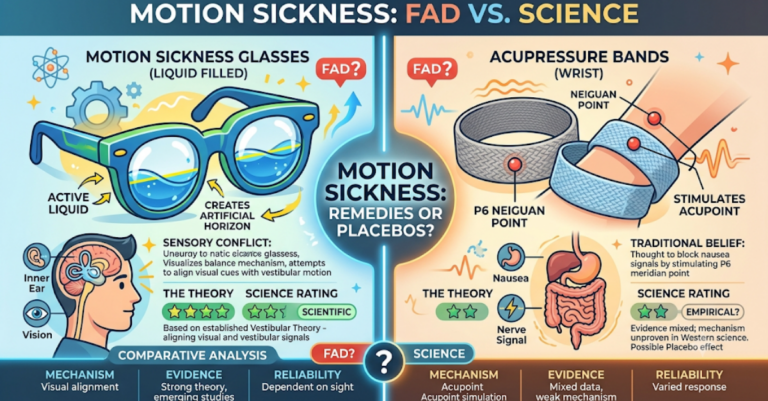
Like all forms of motion sickness, air sickness comes down to a sensory mismatch.
When a plane hits turbulence or banks sharply for a turn, the fluid in your inner ear (your vestibular system) sloshes around, detecting the rapid movement and changes in gravity. However, if you are staring at the seatback screen, reading a book, or looking at the stationary walls of the cabin, your visual system tells your brain that you are sitting perfectly still.
Your brain receives these conflicting signals, gets confused, and triggers an evolutionary defense mechanism: nausea. Combine this sensory conflict with dry cabin air and the pressure changes of high altitude, and you have a perfect recipe for an upset stomach.
The Cabin Crew Toolkit: 4 Secrets to Stop the Spin
Flight attendants cannot afford to be sidelined by a bumpy flight. Here are the tactical, on-the-job secrets they use to keep their equilibrium intact.
1. The “Ice on the Pulse Point” Trick
If you ever tell a flight attendant you are feeling sick, the first thing they will likely do is hand you a cup of ice or a cold, damp paper towel. A sudden spike in body temperature is a primary catalyst for nausea.
-
The Secret: Flight attendants will press a cold compress directly against the pulse points on their inner wrists or the back of their neck. This rapidly cools the blood circulating through the body and shocks the nervous system, which acts as a physical reset button that actively suppresses the vomit reflex. Pointing the overhead AC vent directly at your face achieves a similar result.
2. Strategic Visual Anchoring
Passengers usually deal with turbulence by squeezing their eyes shut or burying their heads in a movie. Flight attendants do the exact opposite.
-
The Secret: They give their brains visual proof of the movement. If they are seated during turbulence, they look straight down the long center aisle of the plane rather than staring at the wall or floor. If they can see out a window, they lock their eyes on the distant horizon or the wing of the plane, aligning their visual system with their inner ear.
3. Ginger Ale (The Altitude Elixir)
There is a reason ginger ale is the most popular drink ordered at 35,000 feet.
-
The Secret: The root of the ginger plant contains active compounds called gingerols, which are scientifically proven to calm stomach spasms and speed up digestion. Furthermore, the light carbonation helps relieve the buildup of stomach gas caused by cabin pressure changes. Crew members often sip on ginger ale (or hot ginger tea) during rough patches to keep their stomachs settled.
4. The Ultimate Secret: Acupressure Bands
Here is the biggest challenge for flight attendants: they cannot take traditional motion sickness pills. Medications like Dramamine cause heavy drowsiness, delayed reaction times, and brain fog. The Federal Aviation Administration (FAA) strictly prohibits crew members from taking anything that impairs their ability to perform safety duties or evacuate an aircraft.
Because pills are off the table, flight attendants rely heavily on acupressure.
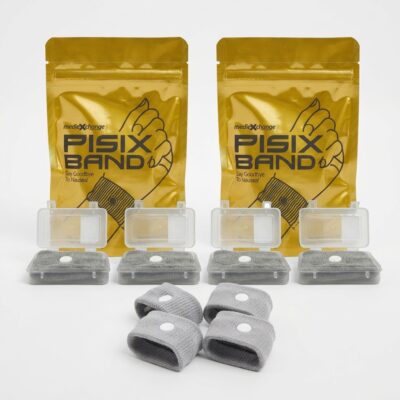
For travelers who want to fly like the pros, the Pisix Band is the ultimate carry-on essential. It is a soft, completely drug-free cotton wristband that uses ancient, proven science to stop nausea at the source.
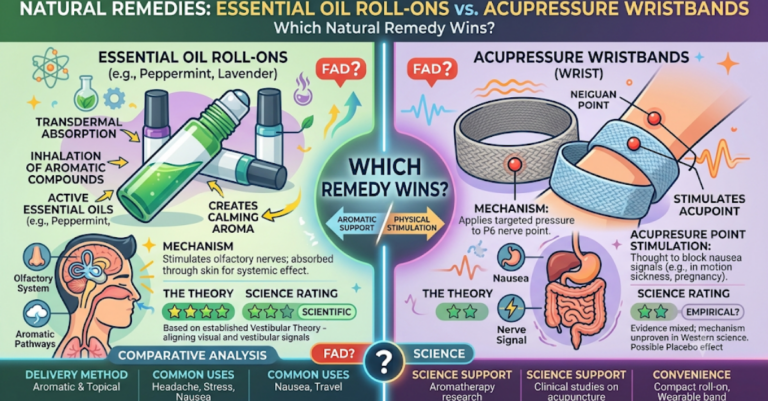
The band features a built-in stud that applies gentle, continuous pressure to the Nei-Kuan (P6) acupressure point on your inner forearm. Stimulating this specific nerve actively intercepts and blocks the “dizzy” signals traveling from your confused brain to your churning stomach.
Why the Pisix Band is perfect for frequent flyers:
-
Zero Drowsiness: You will not land feeling like a zombie. You can step off the plane alert and ready for your vacation or business meeting.
-
100% Drug-Free Safety: Because no chemicals are ingested, it is perfectly safe to use while drinking alcohol on your flight or taking other travel medications.
-
Discreet and Comfortable: The bands look like standard, low-profile athletic sweatbands. The stretch-fit cotton stays comfortable through multi-hour long-haul flights without aggressively pinching your skin.