🎉 FREE shipping + Cash on Delivery on every order · Dispatch in 24 hrs
🎉 FREE shipping + COD · Dispatch in 24 hrs
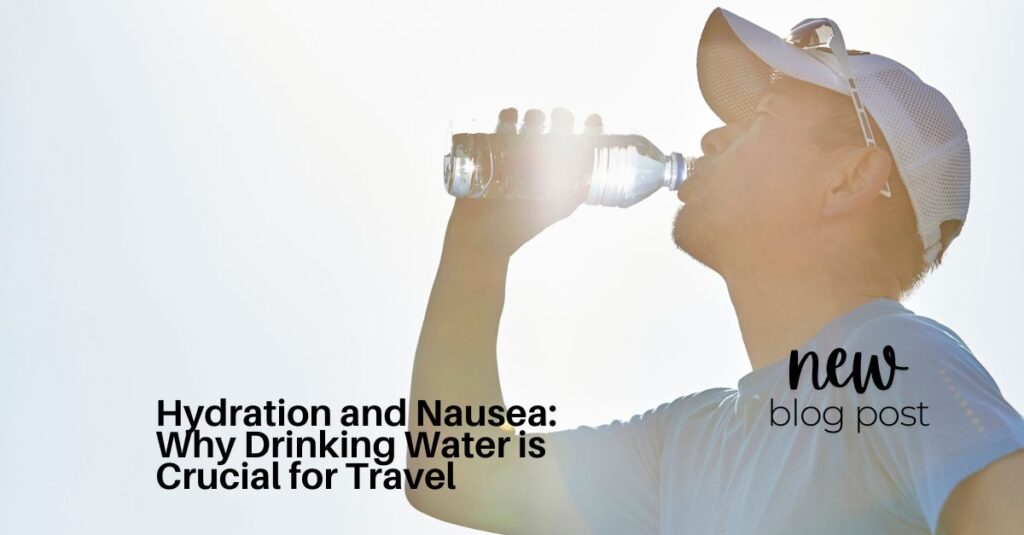
You have packed your bags, mapped out your itinerary, and are finally ready to relax. But halfway through the flight or a few hours into a scenic road trip, it hits you: a dull headache, a heavy stomach, and the unmistakable, creeping sensation of motion sickness.
Most people blame the turbulence, the winding roads, or the scent of the car for their nausea. While those certainly play a role, there is often a hidden, underlying culprit that makes your body infinitely more susceptible to feeling sick: dehydration.
If you want to arrive at your destination feeling energized instead of green, water is your most important travel companion. Here is the science behind why traveling strips your body of moisture, how dehydration directly triggers nausea, and the best natural ways to keep your stomach settled.
It is incredibly easy to become dehydrated while traveling, often without even realizing it. Our normal routines are completely thrown out the window, and several environmental factors start pulling moisture from our bodies.
Airplane Cabin Air: Commercial airplane cabins are pressurized and incredibly dry. The humidity level on a flight is often lower than 20% (drier than the Sahara Desert). Every time you exhale, you lose a significant amount of moisture.
Avoiding the Restroom: Let’s be honest—nobody likes using a tiny airplane bathroom or stopping at a questionable gas station. Travelers routinely and subconsciously restrict their water intake to avoid bathroom breaks.
Travel Beverages: Long travel days usually mean relying on heavy amounts of coffee or taking advantage of the alcoholic beverages on a flight. Both caffeine and alcohol are diuretics, meaning they force your body to expel water at an accelerated rate.
When your body lacks water, it sets off a chain reaction of physiological issues that perfectly prime your nervous system for severe motion sickness.
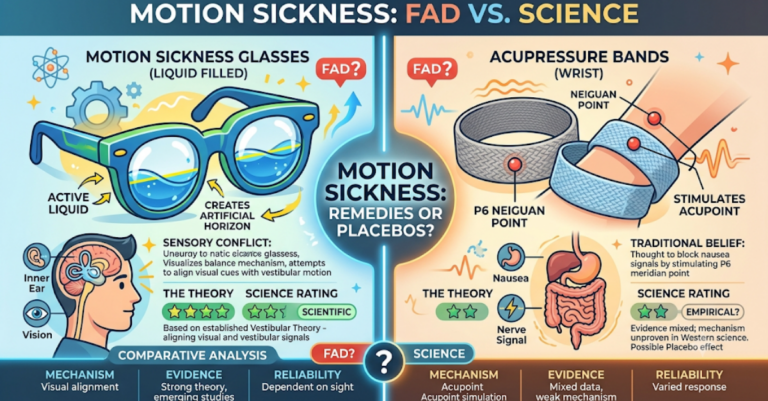
Your inner ear (the vestibular system) is responsible for your sense of balance. It relies on a delicate fluid called endolymph to detect movement. When you are dehydrated, the volume and density of this fluid change. This makes your inner ear hyper-sensitive to every bump, turn, and drop, aggressively worsening the “sensory mismatch” that causes motion sickness.
Your digestive tract needs water to function. When you are dehydrated, your body diverts water away from your stomach to protect vital organs like your heart and brain. This causes your digestion to slow down or stop completely (gastric stasis). Food and stomach acid sit stagnant, quickly leading to cramping, bloating, and intense nausea.
Dehydration lowers your overall blood volume, which causes a drop in blood pressure. This means less oxygen is making its way to your brain, leading directly to the dizziness, lightheadedness, and headaches that usually accompany travel sickness.
Simply chugging a massive bottle of water right before you step onto a bumpy boat or a turbulent flight is a bad idea. A stomach full of sloshing liquid will trigger the vomit reflex just as quickly as dehydration will.
To stay hydrated without upsetting your stomach, use these tactics:
Pre-Load the Day Before: Do not wait until travel day to start drinking water. Heavily hydrate in the 24 hours leading up to your trip so your baseline levels are optimal.
Sip, Don’t Chug: Once you are in motion, take tiny, consistent sips of ice-cold water. Cold water stimulates the vagus nerve in the back of your throat, which actively drops your heart rate and settles stomach spasms.
Leverage Electrolytes: Plain water is great, but water mixed with an electrolyte powder helps your cells absorb the moisture faster and more efficiently, meaning you don’t have to drink as much overall volume.
Proper hydration is the foundation of a settled stomach, but once the physical motion of a boat or a car starts throwing off your inner ear, water alone might not be enough to stop the spin.
For the ultimate, drug-free travel defense, you need to pair your smart hydration strategy with acupressure.
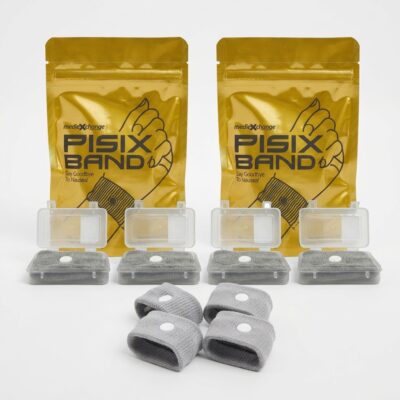
Instead of reaching for drowsy anti-nausea pills that dehydrate you further and leave you feeling exhausted, pack a pair of Pisix Bands in your carry-on.
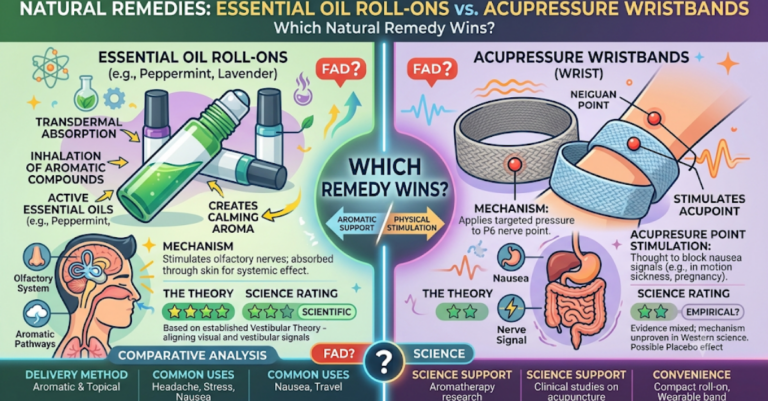
The Pisix Band is a soft, breathable cotton wristband that uses proven acupressure science to intercept nausea signals. It features a carefully positioned stud that applies gentle, continuous pressure to the Nei-Kuan (P6) acupressure point on your inner forearm.
Stimulating this specific median nerve sends a steady, grounding signal to your central nervous system that actively blocks the nausea signals traveling to your churning stomach.
Zero Brain Fog: Because it is 100% chemical-free, you retain your sharp focus and energy for your vacation or business trip.
Perfect Synergy: While hydration keeps your inner ear fluid balanced and your blood pressure stable, the Pisix Band actively manages your nervous system, giving you two layers of completely natural defense.
Comfortable for Long Hauls: The universal stretch-fit cotton design ensures the bands stay comfortable and secure throughout a 10-hour flight or a multi-day road trip.