When severe nausea hits, you want fast, effective relief without the heavy brain fog of chemical antihistamines. Eastern medicine offers two heavily researched, drug-free solutions: acupuncture and acupressure.
Which one is better? Both target the exact same biological pathways to settle your stomach. However, acupressure is the clear winner for travel and daily life due to its continuous, on-the-go application, while acupuncture remains a powerful tool for clinical, stationary settings.
Here is the scientific breakdown of needles versus pressure, and how to choose the right approach for your stomach.
The Shared Target: The Nei-Kuan (P6) Point
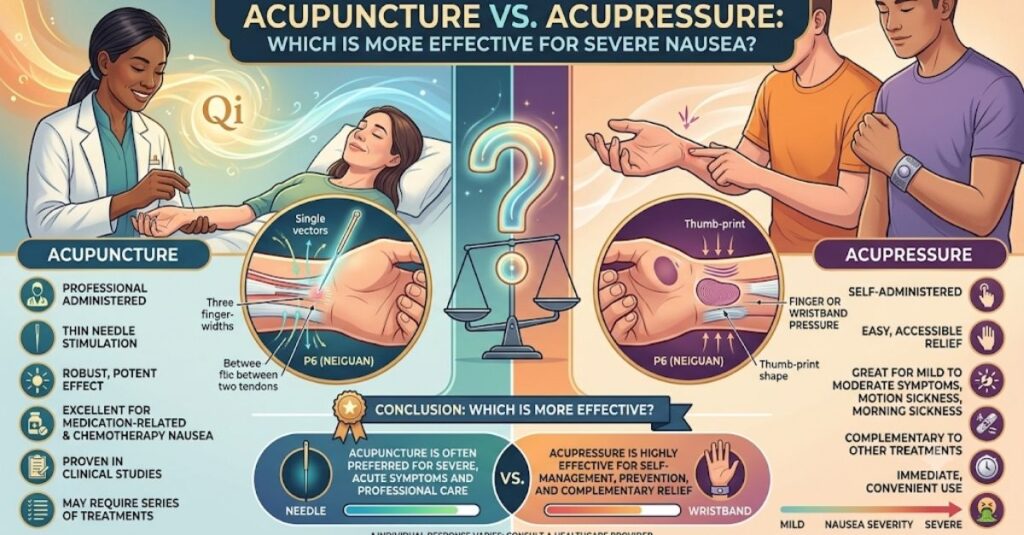
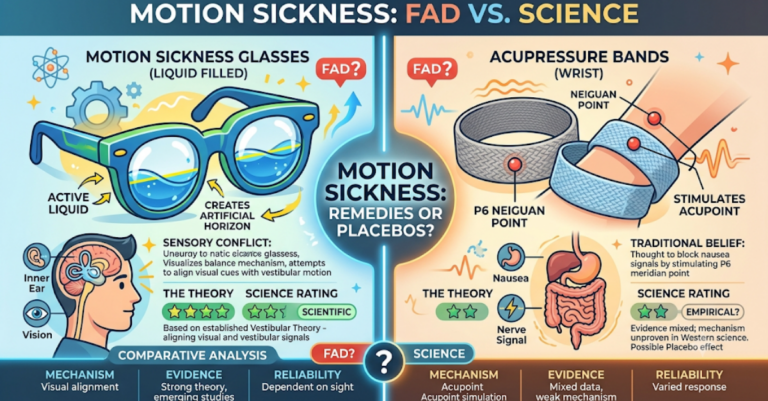
Both techniques focus on stimulating the Nei-Kuan (P6) point. This spot sits exactly three finger-widths below the crease of your inner wrist.
This point sits directly over the median nerve.
Stimulating this major nerve sends a grounding, rhythmic signal straight to your central nervous system. This intercepts and blocks the panic signals causing your stomach to spasm. The difference between the two treatments lies entirely in the delivery mechanism.
Comparing the Delivery Mechanisms
| Feature |
Acupuncture |
Acupressure |
| Method |
Micro-thin needles piercing the skin |
Sustained physical surface pressure |
| Environment |
Clinical, stationary setting |
Mobile, anywhere at any time |
| Relief Style |
Post-session residual relief |
Continuous while pressure is applied |
| Best Used For |
Post-operative care, chronic illness |
Travel, motion sickness, morning sickness |
Acupuncture: Deep Clinical Relief
Acupuncture uses sterile needles to create precise micro-traumas near the median nerve.
This triggers a localized release of endorphins (natural painkillers) and increases blood flow to the area. It is highly effective for treating systemic, chronic issues like chemotherapy-induced nausea.
The main drawback is total immobility. You cannot receive an acupuncture treatment while sitting in stop-and-go traffic or boarding a turbulent flight.
Acupressure: Continuous On-the-Go Defense
Acupressure utilizes Gate Control Theory. By applying continuous physical pressure to the skin above the median nerve, your brain prioritizes this constant “touch” signal over the chaotic sensory signals causing your nausea.
The primary advantage is immediate accessibility. You can trigger this neurological override switch the exact second you start feeling dizzy.
The Ultimate Daily Defense Strategy
For motion sickness, cybersickness, and daily nausea, you need reliable, hands-free pressure.
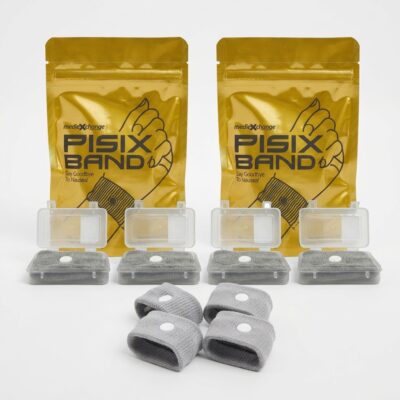
The Pisix Band delivers exactly this. Brought to the market by Mediexchange, this stretch-fit cotton wristband features a built-in precision stud designed to continuously stimulate the P6 point.
-
100% Drug-Free: You get powerful nerve stimulation without the heavy sedation of pills.
-
Highly Accessible: It is a non-sterile wellness product. Because it does not require registration as a Class A medical device, you do not need a prescription to get clinical-grade relief.
-
Logistics Ready: The bands are packaged efficiently in a highly compact 16.5x10x2 cm box.
Whether you are ordering nationally for an upcoming vacation or grabbing a pair locally through quick-commerce delivery apps, securing scientifically backed relief is incredibly simple.
Needles provide excellent clinical care, but daily life requires mobile solutions. By relying on the continuous, targeted pressure of acupressure wristbands, you can intercept nausea before it ruins your day.