
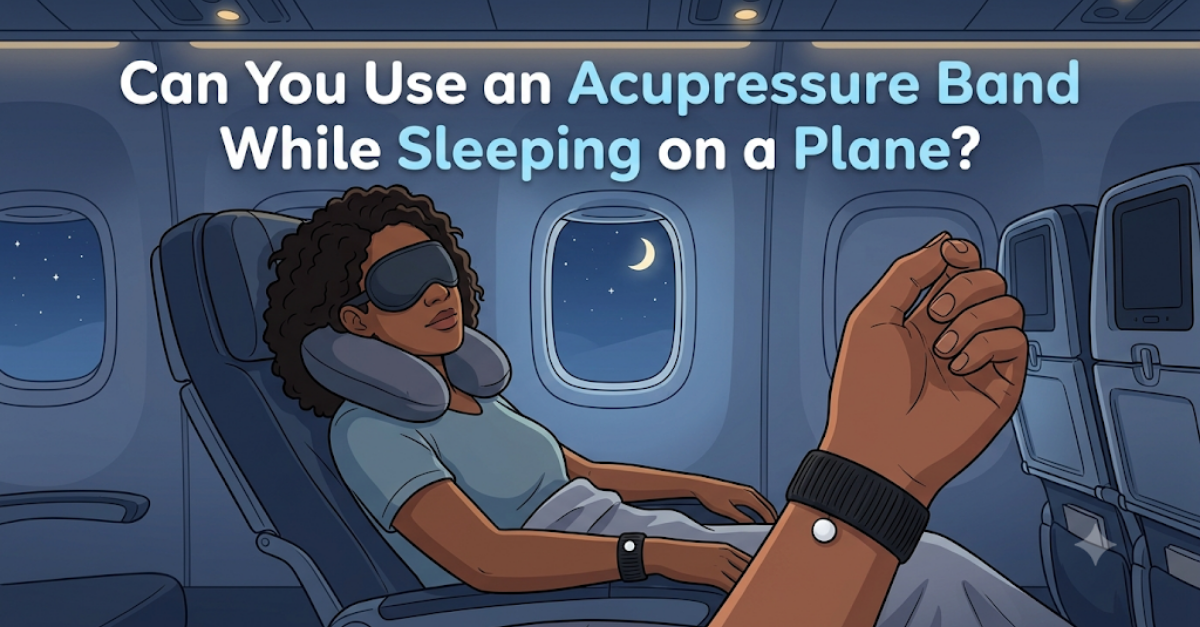
Can You Use an Acupressure Band While Sleeping on a Plane?
If you suffer from travel sickness, stepping onto an airplane often means choosing between two unpleasant options: enduring hours of nausea or taking anti-motion sickness medication that leaves you groggy and dehydrated. Acupressure wristbands (like Sea-Bands) offer a popular, drug-free alternative. But what happens on a red-eye flight when you want to drift off?
The short answer is yes, you can wear an acupressure band while sleeping on a plane, but you need to take a few precautions. While many travelers rely on them for overnight relief, manufacturers generally advise against prolonged, unmonitored use during sleep because the bands apply continuous pressure that could restrict circulation.
Here is what you need to know to use them safely and effectively while catching some in-flight sleep.
How Acupressure Bands Work
Acupressure bands work by applying firm, continuous pressure to the P6 (Nei Guan) acupressure point. In Traditional Chinese Medicine, this point is linked to the stomach and is widely used to relieve nausea, vomiting, and even anxiety.
Interestingly, stimulating the P6 point isn’t just good for motion sickness—it may actually help you sleep. Many users find that gentle pressure on the “Inner Gate” helps calm the nervous system, making it easier to fall asleep and stay asleep in a cramped, noisy cabin.
The Risks of Sleeping with Acupressure Bands
While acupressure is entirely non-invasive, the bands themselves are elasticized to maintain constant pressure. If you wear them while unconscious, you run a few minor risks:
-
Circulation Issues: During sleep, you cannot actively monitor how tight the band feels. If your hands swell—a common occurrence due to cabin pressure and inactivity on long flights—the bands can become constrictive, potentially restricting blood flow or causing numbness.
-
Skin Irritation: Prolonged, tight contact against the skin can cause chafing, redness, or bruising, especially if you tend to toss and turn in your seat.
-
Slippage: If you move around while sleeping, the plastic stud might slip off the P6 point. If it presses into a bone or a different tendon for hours, it can cause dull pain and render the nausea-relief completely ineffective.
Tips for Using Them Safely on a Red-Eye
If you need the nausea relief to make it through a long-haul flight, you can still wear your bands while you sleep by following a few practical steps:
-
Check the fit before takeoff: The band should feel like a firm, constant hug on your wrist. You should be able to comfortably slide your pinky finger underneath the elastic. If it leaves a deep indentation or your fingers feel cold or tingly while you are awake, it is too tight to sleep in.
-
Find the exact spot: Hold your hand up with your palm facing you. Place three fingers just below your wrist crease. The P6 point sits right below your index finger, nestled exactly between the two central tendons. The plastic stud must sit directly in this groove.
-
Take “air out” breaks: If you wake up to use the lavatory or when the cabin crew comes through with water, take the bands off for 5 to 10 minutes. Giving your skin and veins a brief break prevents swelling and irritation.
-
Mark the spot: If you are a restless sleeper, make a tiny dot on your skin with a pen where the plastic stud should sit. If you wake up feeling nauseous, a quick glance will tell you if the band simply shifted out of place during your nap.
Acupressure bands are a highly effective tool for managing mid-air nausea without the hangover effect of medications. By paying attention to the fit and giving your wrists occasional breaks, you can safely wear them to get the rest you need at 30,000 feet.


