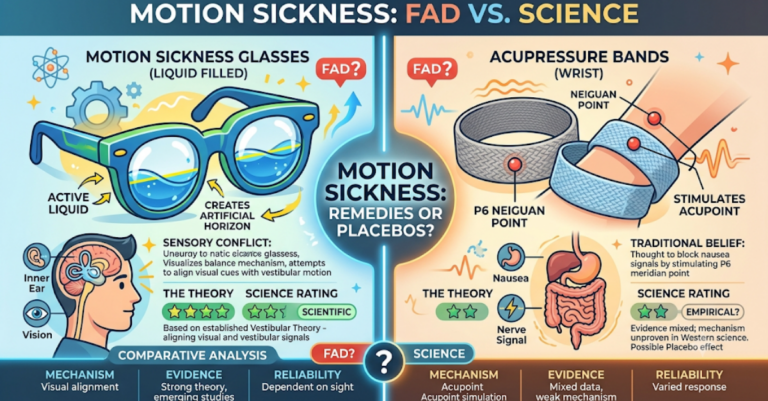
If you rely on prescription eyewear and suffer from chronic car sickness, you have probably blamed the winding roads, the bumpy suspension, or the heavy dinner you ate before the trip. But have you ever considered that the frames sitting on your nose might be making you dizzy?
It sounds strange, but the difference between wearing glasses and wearing contact lenses isn’t just about cosmetics or convenience. Your choice of eyewear fundamentally changes how your brain processes visual information.
When it comes to motion sickness, how your eyes track movement is the difference between a peaceful road trip and a nauseating ordeal. Here is the fascinating biology behind how your eyewear impacts your inner ear, and why making a simple switch could settle your stomach.
The Biology of Peripheral Vision
To understand why eyewear matters, we have to look at the root cause of motion sickness: the sensory mismatch.
Your brain relies on your inner ear (the vestibular system) to feel movement and your eyes to confirm that movement. When you are sitting in a moving car, your inner ear feels the physical acceleration. To prevent you from getting sick, your eyes need to see the passing scenery to confirm, “Yes, we are moving.”
Crucially, your brain gathers the vast majority of its motion data through your peripheral vision. Your central vision is designed for sharp focus (like reading a book), while your peripheral vision acts as a wide-angle motion detector.
Why Glasses Can Worsen the Spin
For many travelers, wearing glasses in a moving vehicle creates artificial visual barriers that trigger sensory panic.
1. The Frame Effect (Artificial Blinders)
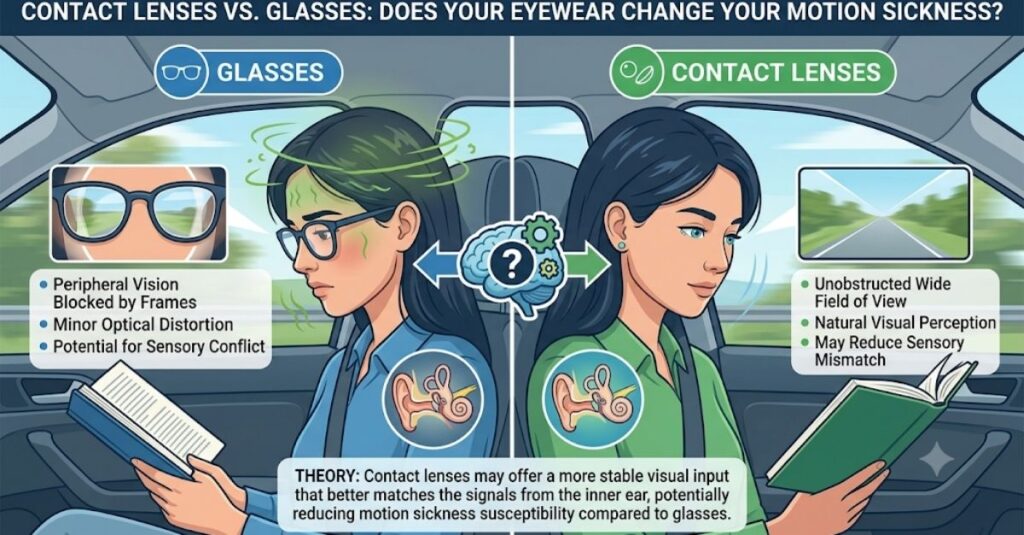
Thick plastic or metal glasses frames physically block a significant portion of your peripheral vision. When you look out the window, your central vision sees the passing trees, but your peripheral vision is obstructed by a stationary rim. This creates a micro-mismatch: your brain is simultaneously processing moving scenery and a static physical barrier right in front of your eyes.
2. Peripheral Distortion
Prescription lenses—especially strong prescriptions, astigmatism corrections, or progressive lenses—only offer perfect clarity in the exact center of the glass. The curved edges of the lenses often warp or distort passing objects. When a tree flashes by your window and hits that distorted edge, the blurred movement confuses your brain’s motion-tracking reflexes, rapidly accelerating eye strain and tension headaches.
The Contact Lens Advantage
If you have the option, swapping your glasses for contact lenses before a long road trip or a boat ride can drastically improve your nausea threshold.
Because contact lenses sit directly on your cornea and move with your eye, they completely eliminate the “blinder” effect of frames. Your peripheral vision is 100% unobstructed, allowing your visual system to take in clear, undistorted motion data.
When your peripheral vision can accurately track the passing horizon without frame obstruction, it perfectly syncs up with the physical bumps your inner ear is feeling. This alignment signals to your brain that you are safe, actively preventing the panic response that leads to a churning stomach.
The Ultimate Defense: Syncing Your Senses
Switching to contact lenses is a fantastic way to clear up your peripheral vision, but it isn’t a cure-all. If you still look down at your phone, read a book, or hit heavy turbulence, your inner ear can still trigger that horrible wave of nausea.
To guarantee a comfortable trip without relying on drowsy chemical antihistamine pills, you need to intercept the distress signal directly at the nervous system level. The most effective, drug-free way to do this is with acupressure.
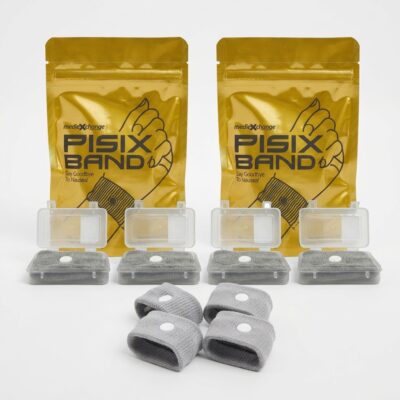
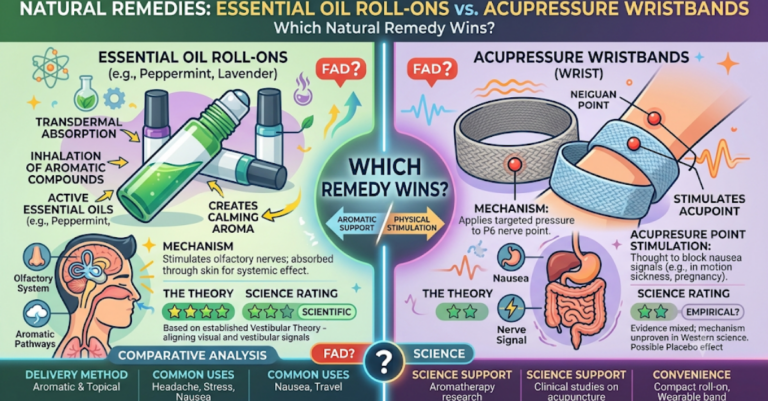
By wearing a Pisix Band, you can safely hit the override switch on your nervous system. Marketed by Mediexchange, the Pisix Band features a built-in precision stud that applies continuous, gentle pressure to the Nei-Kuan (P6) acupressure point on your inner forearm.
Stimulating this specific median nerve sends a steady, grounding touch signal directly to your central nervous system, physically blocking the nausea-inducing distress signals before they reach your stomach.
Why It Belongs in Your Travel Bag
-
Clear-Headed Focus: It is completely chemical-free. You get powerful, immediate relief without the extreme brain fog or dehydration of traditional motion sickness pills.
-
Highly Accessible & Safe: As a non-sterile wellness product, it is entirely exempt from Class A medical device registration. You get safe, clinical-grade relief without needing a prescription.
-
Ready for the Road: Engineered for modern logistics, the bands ship efficiently in a compact 16.5x10x2 cm box. Whether you are stocking up nationally via Amazon FBA or grabbing a pair locally through 10-minute quick-commerce apps like Blinkit right here in Indore, keeping a clear head and a settled stomach has never been easier.