🎉 FREE shipping + Cash on Delivery on every order · Dispatch in 24 hrs
🎉 FREE shipping + COD · Dispatch in 24 hrs
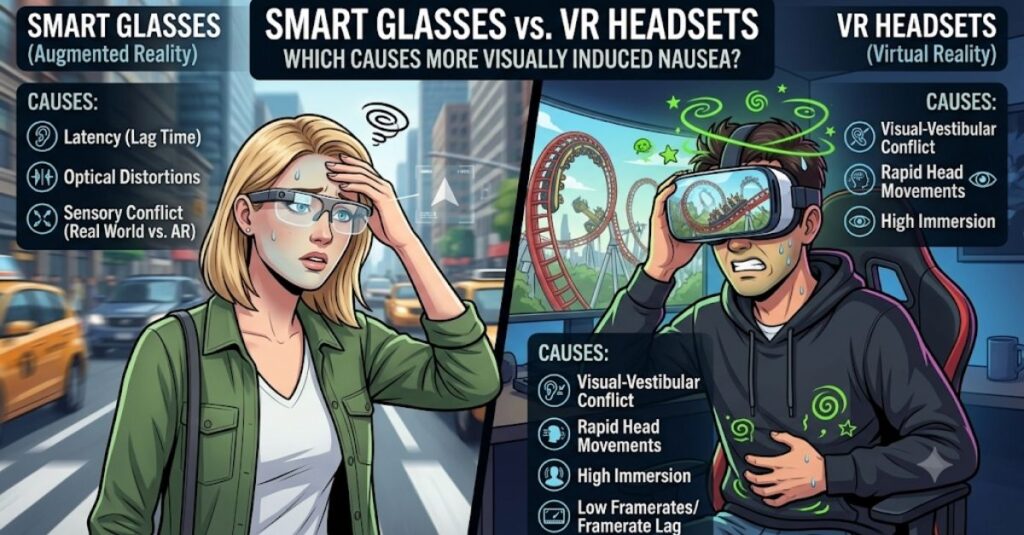
We are officially in the era of spatial computing. From the fully immersive Apple Vision Pro and Meta Quest headsets to the sleek, augmented reality (AR) frames of Ray-Ban Meta smart glasses, wearable displays are changing how we work and play.
However, as adoption skyrockets, a major biological hurdle has emerged: Visually Induced Motion Sickness (VIMS), often referred to simply as “cybersickness.”
Many tech enthusiasts are finding that strapping a screen to their face results in a sudden wave of nausea, dizziness, and intense headaches. But does the type of device matter? Between fully enclosed Virtual Reality (VR) headsets and transparent Smart Glasses, which one is more likely to make your stomach churn—and more importantly, how do you stop it?
Here is the science behind cybersickness and how you can naturally defend against it.
When you put on a VR headset, you are entirely occluded from the real world. This total immersion is fantastic for gaming and 3D modeling, but it creates a massive sensory mismatch in your brain.
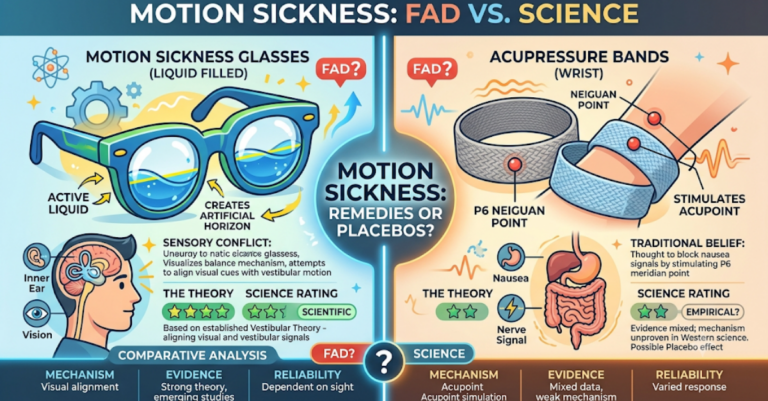
Motion sickness occurs when your visual system (what your eyes see) and your vestibular system (what your inner ear feels) disagree.
In VR, your eyes tell your brain, “We are running through a battlefield” or “We are flying a spaceship at Mach 2.” But your inner ear feels your body sitting perfectly still on the living room couch. This aggressive contradiction causes your brain to panic, assuming you are hallucinating. The immediate physiological response to this panic is a cold sweat, a heavy head, and a sudden urge to vomit.
The Verdict on VR: VR headsets are the primary culprits for traditional nausea. They heavily trigger the vestibular mismatch that leads to a churning stomach.
Smart glasses and AR headsets take a different approach. Because the lenses are transparent, you can still see the real world around you, allowing your peripheral vision to remain anchored in reality. You might assume this prevents motion sickness entirely, but AR introduces a different biological glitch: The Vergence-Accommodation Conflict (VAC).
In the real world, your eyes naturally converge (aim) and accommodate (focus) on an object at the exact same distance. Smart glasses project a digital image on a lens less than an inch from your cornea, but the software tricks your brain into thinking the image is floating 10 feet away.
Your eyes are forced to focus on the screen right in front of them while simultaneously trying to aim at the digital object floating in the distance. This breaks your natural eye mechanics.
The Verdict on Smart Glasses: While they cause less traditional “stomach-churning” nausea than VR, smart glasses are notorious for causing severe eye strain, tension headaches, and dizziness. This eye strain can quickly escalate into a secondary wave of nausea if the device is worn for too long.
If you want to enjoy the future of wearable tech without feeling green, you have to actively manage your sensory input.
Dial In the IPD: IPD stands for Interpupillary Distance (the space between your pupils). If your headset’s lenses do not perfectly align with your eyes, you will experience instant visual blurring and rapid nausea. Always measure your IPD and manually adjust the lenses before launching an app.
Use a Physical Anchor: If you are playing a VR game that involves walking or flying, position a small desk fan so it blows directly on your face. The physical sensation of the air provides a grounding, real-world anchor that helps your brain process the artificial movement.
The 20-20-20 Rule: For smart glasses, you must manage eye strain. Every 20 minutes, look past the digital overlay and focus your eyes on a real-world object at least 20 feet away for 20 seconds. This allows your eye muscles to reset and prevents tension headaches.
If you are highly susceptible to cybersickness, taking a traditional anti-nausea pill before strapping on a headset is a terrible idea. Over-the-counter medications like Dramamine cause heavy drowsiness and severely delay your reaction times—ruining the gaming experience entirely.
To stay alert while keeping the nausea at bay, acupressure is the ultimate, drug-free tech accessory.
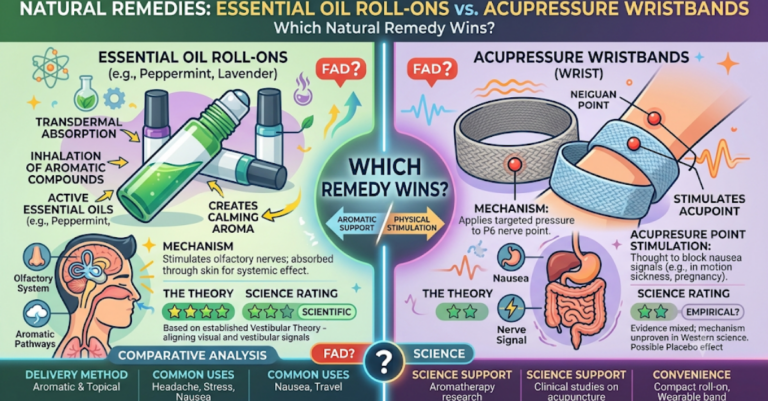
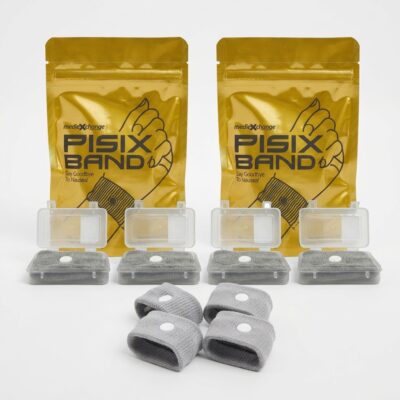
By wearing a Pisix Band during your VR or AR sessions, you can actively intercept the sensory mismatch. The band features a built-in stud that applies gentle, continuous pressure to the Nei-Kuan (P6) pressure point on your inner forearm. Stimulating this median nerve sends a grounding signal to your brain that actively blocks the nausea signals traveling to your stomach.
Zero Latency Relief: No waiting 45 minutes for a pill to digest. Slip them on right as you put on your headset for immediate defense.
No Brain Fog: Because it is entirely physical, your reflexes remain lightning-fast and your mind stays sharp.
E-Commerce Ready: Engineered for modern convenience, the bands are packaged in a compact, mailbox-friendly 16.5x10x2 cm box. Whether you are ordering nationally via Amazon FBA or grabbing them locally through 10-minute delivery apps like Blinkit, fast relief is just a click away.
Both VR and Smart Glasses challenge human biology in unique ways—VR throws off our inner ear, while AR strains our eye mechanics. By properly adjusting your hardware, taking calculated breaks, and relying on the continuous, non-drowsy acupressure relief of the Pisix Band, you can safely explore the digital frontier without the dizziness.