🎉 FREE shipping + Cash on Delivery on every order · Dispatch in 24 hrs
🎉 FREE shipping + COD · Dispatch in 24 hrs
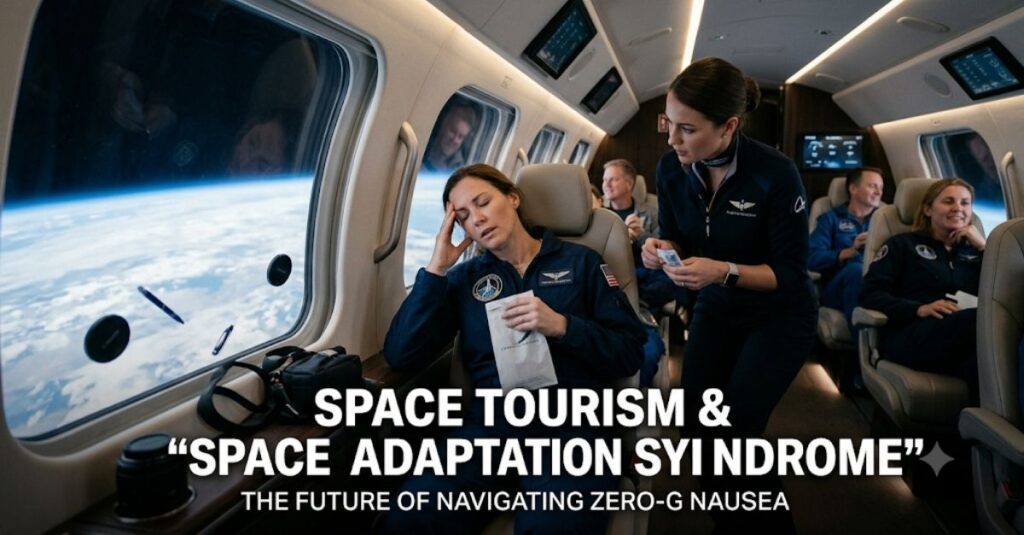
Commercial space flight is no longer the plot of a sci-fi novel. With companies like Blue Origin, Virgin Galactic, and SpaceX successfully launching civilians into orbit, the dream of booking a weekend trip to the stars is rapidly becoming a reality.
But as space tourism transitions from a billionaire’s novelty to an accessible commercial industry, a massive biological hurdle stands in the way of a five-star orbital experience: Space sickness.
If you think reading in the backseat of a taxi makes you nauseous, zero gravity introduces a sensory mismatch that challenges human biology on a completely different level. Officially known as Space Adaptation Syndrome (SAS), this extreme form of motion sickness affects up to 80% of all astronauts during their first few days in space.
Here is the fascinating science behind why escaping Earth’s gravity makes your stomach churn, and how the future of space tourism plans to conquer the nausea.
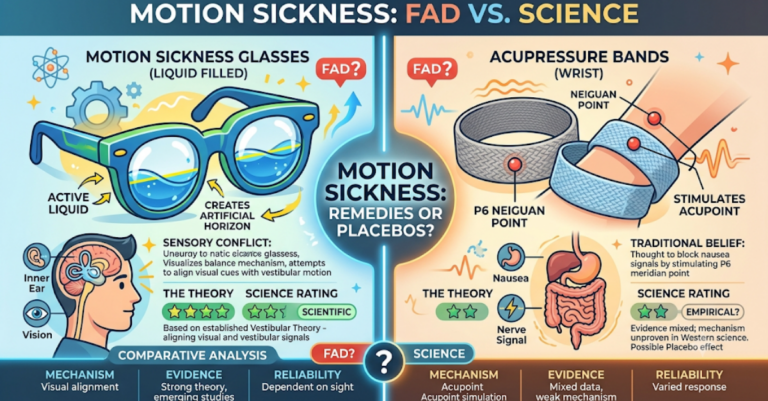
On Earth, motion sickness is usually caused by a conflict between your eyes (what you see) and your inner ear (what you feel). Space Adaptation Syndrome takes this conflict and amplifies it by completely disabling your inner ear’s primary tool for detecting “up” and “down.”
Your balance is controlled by your vestibular system, a complex network of fluid-filled canals and tiny sensory organs located deep inside your ear.
Inside your inner ear are tiny calcium carbonate crystals called otoliths. On Earth, gravity constantly pulls these crystals downward against sensory hair cells. This constant downward pressure tells your brain exactly which way the ground is, allowing you to walk, stand, and balance without thinking about it.
The moment a spacecraft breaches the atmosphere and enters microgravity, those crystals stop falling.
Without gravity, the otoliths float aimlessly inside your ear. Suddenly, your brain loses all sense of directional orientation. Your eyes might see the ceiling of the space capsule, but your inner ear is sending chaotic, static signals that suggest you are tumbling out of control. Your brain panics at this extreme loss of spatial data and immediately triggers a defense response: severe vertigo, cold sweats, and intense stomach flips.
For NASA astronauts, dealing with SAS is a frustrating but accepted part of the job. It typically takes the brain about 72 hours to “re-wire” itself and learn to rely purely on visual cues instead of the useless inner ear data.
However, commercial space tourists paying massive sums for a sub-orbital flight do not have 72 hours to adapt. They need immediate relief. Here is how modern space travelers manage the symptoms:
Visual Anchoring: In zero gravity, there is no true “up” or “down,” but tourists are trained to define their own. By picking a fixed architectural point in the cabin (like a control panel or a window frame) and keeping their feet oriented toward it, they can trick their visual system into establishing a temporary “floor,” which helps calm the brain’s panic response.
Limiting Head Movements: Rapidly turning your head in microgravity forces the inner ear fluid to slosh around chaotically. Space tourists are advised to keep their necks relatively stiff and turn their entire bodies slowly to look around.
Pharmaceuticals (The Drawback): Astronauts often use heavy medications like Promethazine to suppress the vomit reflex. However, these drugs act as intense sedatives. For a space tourist, taking a pill that causes extreme drowsiness and brain fog defeats the entire purpose of the trip—you want to be fully alert to enjoy the view.
Whether you are preparing for a sub-orbital launch or just trying to survive a bumpy taxi ride to the airport, relying on heavy sedatives to stop motion sickness is an outdated strategy. To stay sharp, alert, and focused, the best defense is acupressure.
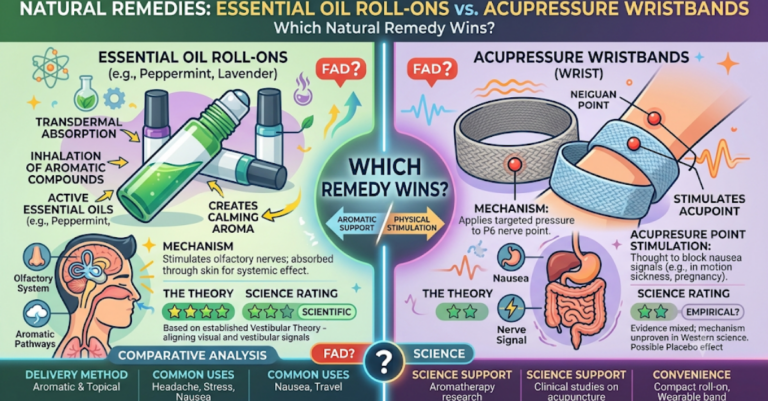
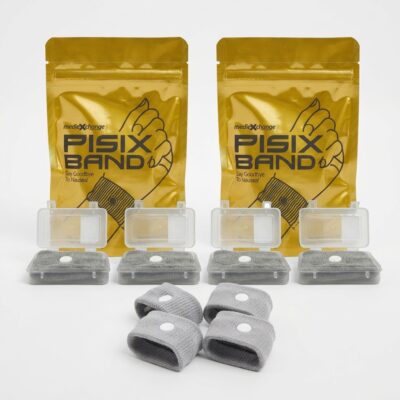
By wearing a Pisix Band, you can safely intercept nausea signals using your body’s own nervous system.
Marketed by Mediexchange, the Pisix Band is a soft, breathable cotton wristband that features a built-in precision stud. This stud applies gentle, continuous pressure to the Nei-Kuan (P6) acupressure point on your inner forearm. Stimulating this median nerve sends a steady, grounding signal to your central nervous system that actively blocks the distress signals traveling from your confused brain to your churning stomach.
Zero Brain Fog: Because the relief is 100% chemical-free, you retain your sharp focus and energy—ensuring you don’t miss a second of the experience.
Ready for Any Journey: The stretch-fit cotton design is comfortable enough for all-day wear, whether you are enduring the G-forces of a launch or hitting turbulence on a commercial flight.
Highly Accessible: You don’t need a prescription to get world-class relief. Packaged in a sleek, compact 16.5x10x2 cm box, it is optimized for modern logistics. You can grab it nationally via Amazon FBA, or if you need it instantly before a trip in local hubs like Indore, it is readily available through 10-minute quick-commerce apps like Blinkit.
Space tourism is an incredible testament to human engineering, but our biology still has some catching up to do. Until our inner ears learn to navigate zero gravity flawlessly, understanding the limits of your vestibular system and packing the right drug-free tools—like the continuous acupressure relief of the Pisix Band—ensures you can enjoy the ride, no matter how high you fly.