You are sitting in the backseat of a car or on the deck of a boat, feeling perfectly fine. Suddenly, you let out a massive yawn. A minute later, you yawn again. Then, a cold, clammy sweat breaks out across your forehead and the back of your neck. You aren’t tired, and it isn’t hot outside—yet these two symptoms are the universal warning signs that a severe wave of nausea is about to hit.
If you suffer from motion sickness, you know this sequence all too well. But why does feeling “car sick” trigger symptoms that seem completely unrelated to your stomach?
The answer lies deep within your nervous system. Yawning and cold sweats are not random; they are your brain’s desperate, evolutionary attempt to protect you from what it thinks is a deadly neurotoxin. Here is the fascinating biology behind the pre-vomit warning signs.
The Root Cause: Your Brain Thinks You Are Poisoned
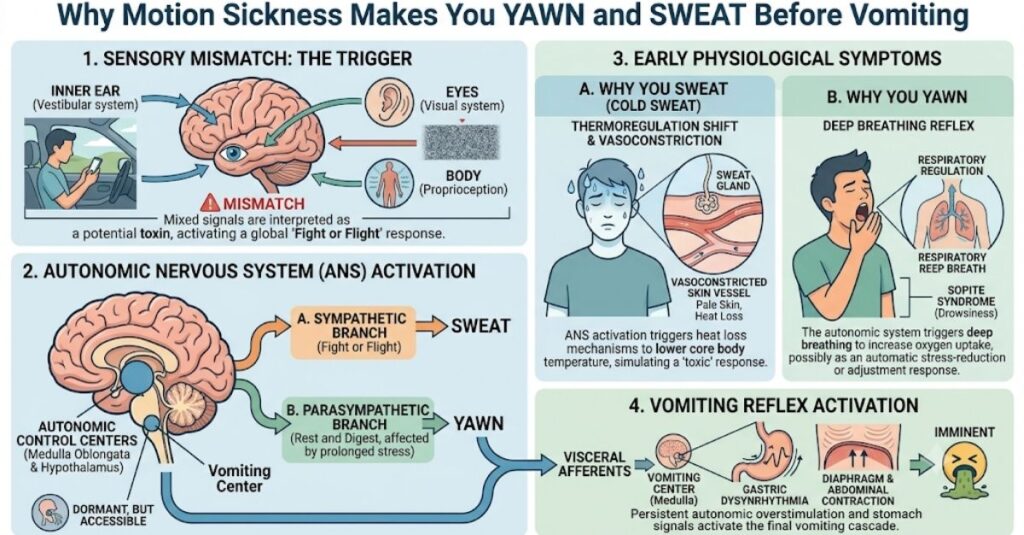
All motion sickness begins with a sensory mismatch. Your eyes tell your brain one thing (e.g., “We are sitting still inside a car cabin”), while your inner ear feels something entirely different (e.g., “We are accelerating and swerving”).
Evolutionarily speaking, the only time in human history that our eyes and our inner ears disagreed so aggressively was if we had ingested a toxic plant or spoiled meat that caused neurological hallucinations.
When your brain receives this conflicting data, it doesn’t realize you are just riding in an Uber. It assumes you are poisoned. To save your life, it triggers the autonomic nervous system—the control center for your fight-or-flight response—to prepare your body to expel the “toxin.”
Why You Can’t Stop Yawning
When the autonomic nervous system hits the panic button, your heart rate spikes and your core body temperature begins to rise as adrenaline floods your system.
The sudden chain of yawning has absolutely nothing to do with being tired. It is a physiological reflex designed to cool your brain down.
When you take a deep, massive yawn, you inhale a large rush of cool ambient air. Simultaneously, the stretching of your jaw muscles increases blood flow to your skull. The cool air chills the blood in your nasal and oral cavities, which is then sent directly to your brain to prevent it from overheating during the stress response.
If you find yourself repeatedly yawning in the passenger seat, your brain is actively fighting off a rising core temperature caused by sensory panic.
The Biology of the “Cold Sweat”
Shortly after the yawning starts, you will likely experience diaphoresis—a sudden, cold sweat, usually centralized on your forehead, upper lip, and the back of your neck.
This happens because your body is preparing for a physical emergency. The fight-or-flight response instantly diverts blood away from your skin and your digestive tract, pushing it instead toward your vital organs and major muscle groups so you can fight or run away.
Because the blood leaves the surface of your skin, you suddenly look pale, and your skin feels physically cold to the touch. However, the massive spike in stress hormones (like cortisol and adrenaline) simultaneously triggers your sweat glands to open up.
The result? Your body is producing sweat on skin that is rapidly dropping in temperature, creating the unmistakable, clammy “cold sweat” that precedes vomiting.
How to Intercept the Signals
Once the yawning and sweating start, the nausea is usually only minutes away. If you want to stop the cycle before your stomach actually starts spasming, you have to intercept the distress signals traveling along your nervous system.
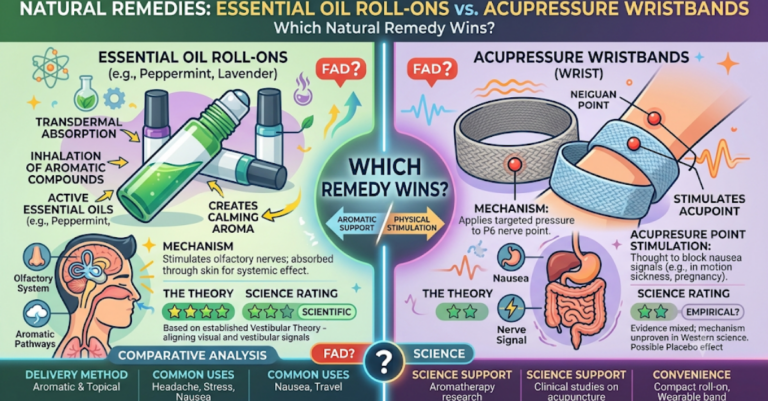
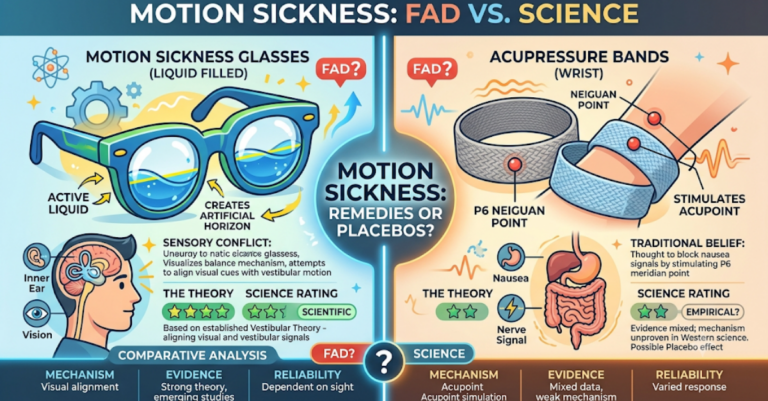
The most effective, drug-free way to hit the “override” switch is acupressure.
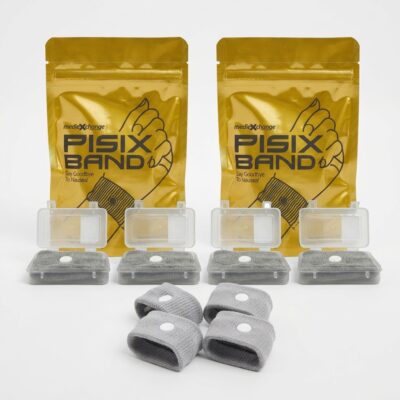
By wearing a Pisix Band, you can actively block the nausea signals before they escalate. Engineered by Mediexchange, the Pisix Band is a comfortable, stretch-fit cotton wristband that features a built-in precision stud. This stud applies gentle, continuous pressure to the Nei-Kuan (P6) acupressure point on your inner forearm.
Stimulating this specific median nerve sends a grounding, calming signal directly to your central nervous system. It tells your brain that you are safe, actively shutting down the fight-or-flight panic that causes the cold sweats and stomach spasms.
The Clear-Headed Advantage
-
Zero Drowsiness: Unlike traditional over-the-counter antiemetics that cause heavy brain fog, the Pisix Band is 100% chemical-free. You can stop the yawning and sweating without feeling sedated.
-
Rapid Delivery: Designed for modern e-commerce convenience, the bands are packaged in a highly compact 16.5x10x2 cm box. Whether you are ordering nationally via Amazon FBA or grabbing them locally through 10-minute quick-commerce apps like Blinkit right here in Indore, you can get reliable relief delivered exactly when you need it.
Conclusion
The next time you are traveling and feel an uncontrollable urge to yawn followed by a sudden chill, don’t ignore it. It is your nervous system waving a massive red flag. By recognizing these early biological warning signs and keeping a Pisix Band on your wrist, you can intercept the sensory panic, settle your stomach, and enjoy the rest of your journey.