Ever notice how some families can comfortably read books in the backseat during a winding cross-country road trip, while others get pale and nauseous just backing out of the driveway?
For decades, getting car sick was viewed purely as a mechanical issue—a temporary glitch where your eyes and your inner ear fail to communicate properly. While that sensory mismatch is the physical trigger, modern science has revealed that your susceptibility to it might be hardwired into your DNA.
If you have ever wondered if you passed your weak stomach down to your kids, or why you seem to be the only one in your friend group who gets seasick, here is a deep dive into the genetics of motion sickness and how you can manage it.
The 23andMe Discovery: Uncovering the Genetic Link
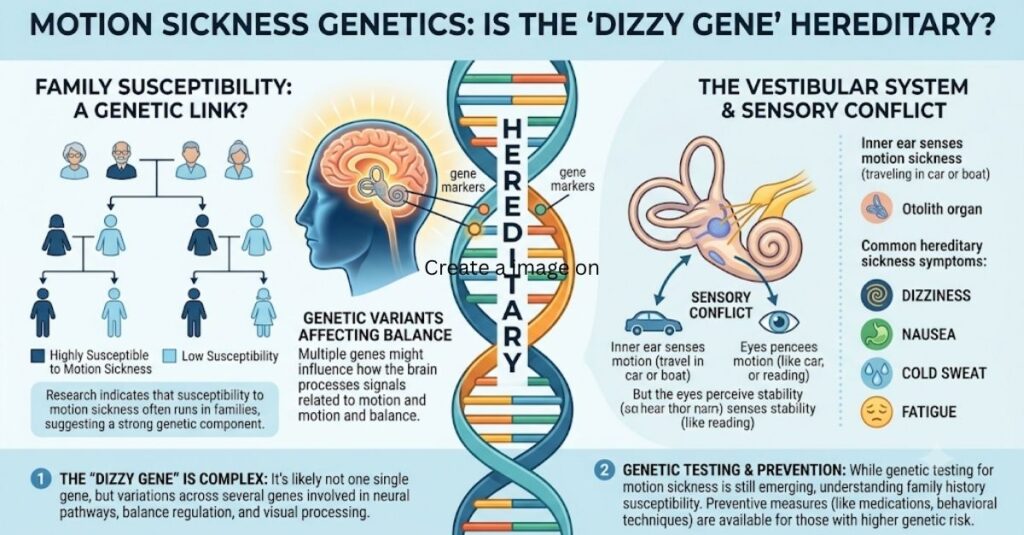
The idea that motion sickness is hereditary was largely anecdotal until a massive 2015 study conducted by the DNA testing company 23andMe. By analyzing the genetic data of over 80,000 customers, researchers made a groundbreaking discovery: motion sickness is highly heritable.
The study identified 35 specific genetic markers (SNPs) that are strongly associated with whether or not a person gets car sick. Interestingly, these genes weren’t entirely isolated; they were deeply connected to other biological functions.
What Else the “Dizzy Genes” Control
The researchers found that the genetic markers linked to motion sickness are also heavily involved in:
-
-
Balance and Eye Development: Genes that dictate how the inner ear and visual systems form are directly tied to motion sickness, meaning some people are quite literally built to be more sensitive to sensory mismatches.
-
Sleep Regulation: There is a strong genetic correlation between motion sickness and poor sleep. The genes that make you susceptible to nausea also appear to make you more prone to light sleeping and morning grogginess.
-
Nausea Sensitivity: Some of the identified genes are responsible for regulating the body’s general nausea threshold. This explains why people who are highly prone to car sickness are also genetically more likely to experience severe morning sickness during pregnancy or post-operative nausea.
Nature vs. Nurture: Can You Outgrow It?
If motion sickness is written into your DNA, are you doomed to a lifetime of dizzy travel? Not necessarily.
While the predisposition is genetic, the severity is heavily influenced by age and environmental factors. The inner ear continues to develop throughout childhood, which is why motion sickness typically peaks between the ages of 6 and 12. As the nervous system matures and the brain gains more experience processing complex motion (like driving a car), many people “outgrow” their most severe symptoms by their early twenties.
However, the underlying genetic sensitivity remains. It just takes a more extreme sensory mismatch—like reading a spreadsheet in the back of a taxi, playing intense VR games, or boarding a deep-sea fishing boat—to trigger it in adulthood.
How to Beat Your Genetics Naturally
You cannot rewrite your DNA, but you can absolutely change how your nervous system reacts to motion. Because genetics often make the brain hyper-sensitive to histamine spikes and sensory panic, taking traditional anti-nausea pills (like Dramamine) will simply knock you out, leaving you heavily sedated.
If you want to stay alert while managing a genetic predisposition to nausea, you need a physical intervention that works with your nervous system.
The ultimate tool for the whole family is acupressure.
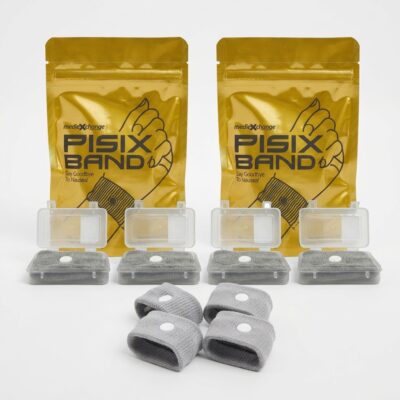
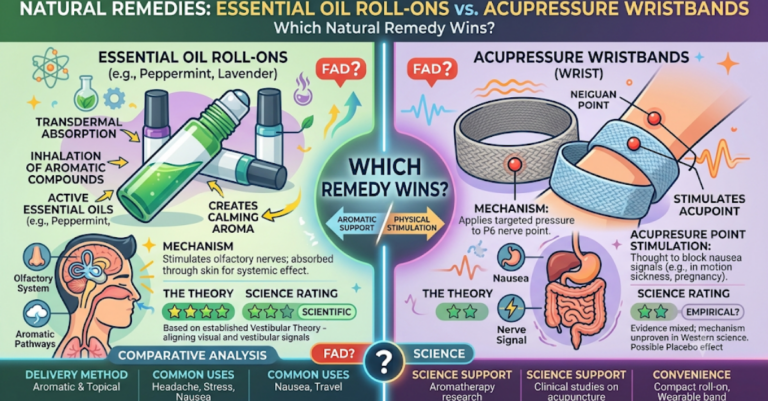
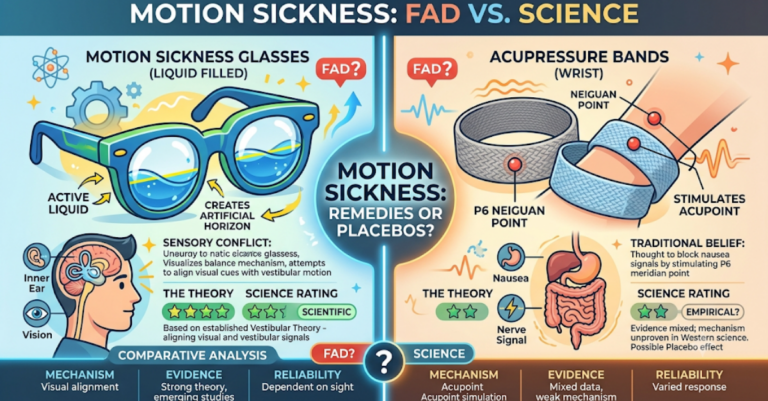
By wearing the Pisix Band, you can safely intercept the brain’s panic signals regardless of your genetic sensitivity. Engineered by Mediexchange, the Pisix Band is a comfortable, universal-stretch cotton wristband featuring a precision stud. This stud applies continuous pressure to the Nei-Kuan (P6) acupressure point on your inner forearm.
Stimulating this specific median nerve sends a steady, grounding signal to your central nervous system that actively blocks the nausea signals traveling to your stomach.
Why It Is Perfect for Families:
-
100% Drug-Free: Safe for both adults and children over the age of three. It prevents the heavy brain fog and drowsiness associated with chemical antihistamines.
-
Instant & Continuous: Slip them on the moment the car starts moving. Because the relief is physical, there is no waiting for a pill to digest.
-
Highly Accessible: Packaged efficiently in a compact 16.5x10x2 cm box, it is easy to keep a pair in the glovebox and another in your carry-on. Whether you are ordering nationally via Amazon FBA or relying on local quick-commerce apps like Blinkit right here in Indore before a weekend road trip, reliable defense for your family is always within reach.
Conclusion
Getting car sick isn’t just in your head—it is literally in your genes. But a genetic predisposition doesn’t have to dictate how you travel. By understanding your biological triggers and relying on the continuous, non-drowsy relief of the Pisix Band, you can hit the road with confidence and leave the nausea behind.