🎉 FREE shipping + Cash on Delivery on every order · Dispatch in 24 hrs
🎉 FREE shipping + COD · Dispatch in 24 hrs
If you suffer from severe car sickness or seasickness, you have probably been told to take an over-the-counter pill like Dramamine, Benadryl, or Bonine before your trip. These medications are often highly effective at stopping an upset stomach. But if you look closely at the active ingredients, you might notice something strange: they are actually antihistamines—the exact same class of drugs used to treat seasonal allergies, sneezing, and hives.
Why would an allergy medicine stop your stomach from churning on a winding road?
The answer lies in how your brain communicates during a moment of panic. Here is the fascinating biology behind the histamine connection to motion sickness, why these pills work, and the massive drawback that makes many travelers seek out a better, drug-free alternative.
Most of us associate histamines with pollen, pet dander, and itchy eyes. When you encounter an allergen, your immune system releases histamines to trigger inflammation, which helps flush the irritant out of your body.
However, histamines have a completely different, secondary job in the body: they act as neurotransmitters in the brain.
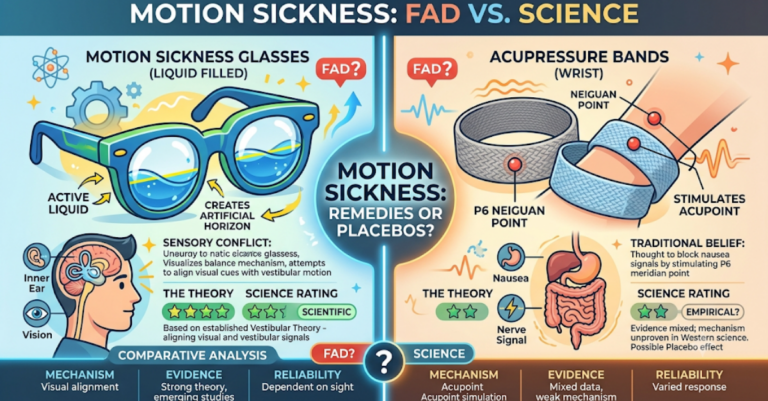
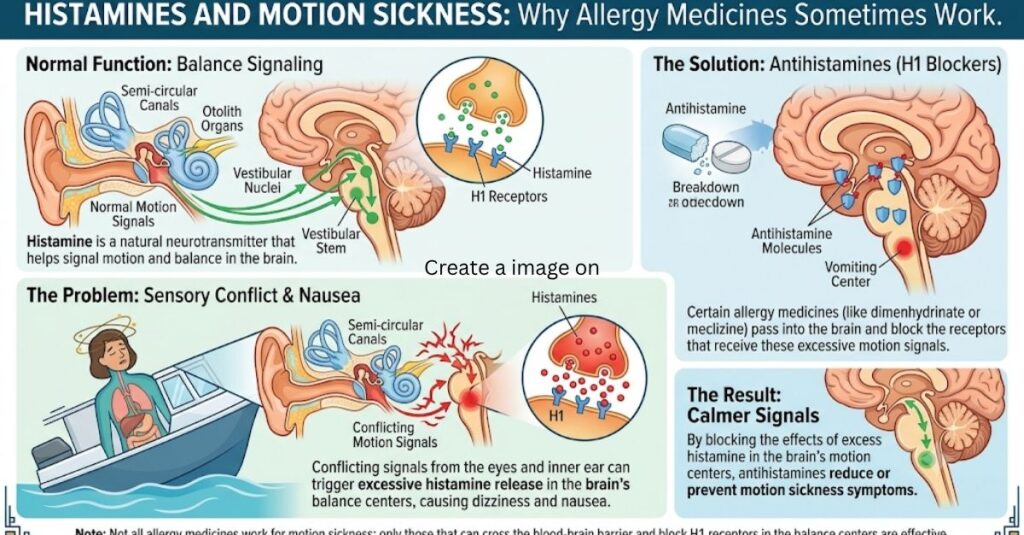
When you experience motion sickness, it is because of a sensory mismatch. Your eyes see one thing (e.g., the static interior of a car cabin) while your inner ear feels something else (the swerving of the road). Your brain panics at this conflicting data, assuming you have been poisoned.
To protect you, the brain activates the vomiting center located in the medulla oblongata. The primary chemical messenger the brain uses to send this “expel the toxin” signal to your stomach is histamine. During a bumpy ride, your brain literally floods its H1 receptors with histamine, which directly triggers nausea, cold sweats, and stomach spasms.
Motion sickness medications like dimenhydrinate (Dramamine) and diphenhydramine (Benadryl) are H1 receptor antagonists.
When you take these pills, the medication travels to your brain and physically blocks the H1 receptors. Even though your inner ear and your eyes are still sending conflicting signals, and your brain is still trying to sound the alarm, the histamine has nowhere to bind. The signal is intercepted before it ever reaches your stomach, effectively stopping the nausea in its tracks.
If Benadryl works, why can’t you take a modern, non-drowsy allergy pill like Claritin (loratadine) or Zyrtec (cetirizine) for a boat ride?
It all comes down to the blood-brain barrier. Modern antihistamines were specifically engineered not to cross the blood-brain barrier so that they wouldn’t cause fatigue. Because they stay in your peripheral nervous system, they are great for a runny nose, but they cannot reach the vomiting center in your brain to stop motion sickness.
Only the older, first-generation antihistamines can cross the barrier to block the nausea signals.
Because first-generation antihistamines must cross into the brain to work, they come with a severe side effect: they aggressively depress your central nervous system.
Blocking histamine in the brain doesn’t just stop nausea; it also shuts down your brain’s wakefulness pathways. This results in heavy, unavoidable sedation. Taking these pills often means:
Extreme drowsiness and lethargy
Severe brain fog and delayed reaction times
Dry mouth and dehydration
Sleeping through the exact vacation, road trip, or cruise you were trying to enjoy.
You shouldn’t have to choose between a churning stomach and being heavily sedated for your entire journey. If you want to arrive at your destination awake, alert, and feeling great, you need to intercept the nausea signals without flooding your brain with chemicals.
The most effective way to do this is with acupressure.
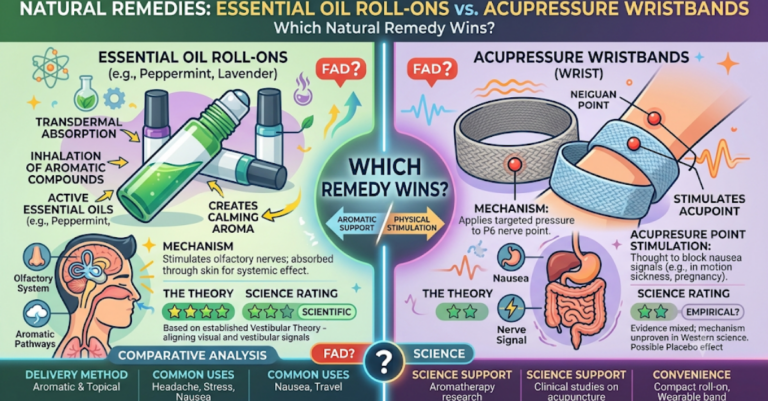
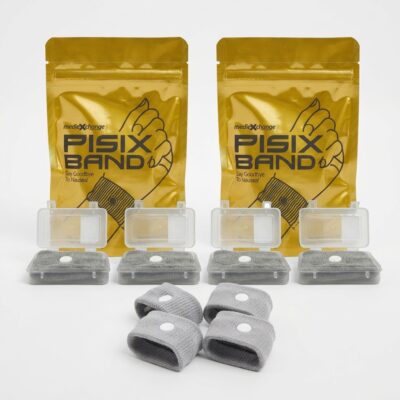
By wearing a Pisix Band, you can actively block the distress signals using your body’s own nervous system. Engineered by Mediexchange, the Pisix Band is a comfortable, stretch-fit cotton wristband featuring a built-in precision stud. This stud applies gentle, continuous pressure to the Nei-Kuan (P6) acupressure point on your inner forearm.
Stimulating this specific median nerve sends a grounding, calming signal to your central nervous system that actively overrides the brain’s panic response—bypassing the histamine receptors entirely.
Zero Brain Fog: Because it is 100% drug-free, you retain your sharp focus and energy. You can read, work, or navigate without feeling groggy.
Instant Activation: You don’t have to wait 45 minutes for a pill to digest. Slip the bands on the moment you feel dizzy for rapid recovery.
Convenient & Accessible: Designed for modern e-commerce, the bands are efficiently packaged in a compact 16.5x10x2 cm box. Whether you are ordering nationally via Amazon FBA or grabbing them locally through 10-minute quick-commerce apps like Blinkit right here in Indore, keeping a clear head is easier than ever.
Understanding how your body uses histamines to trigger nausea explains why allergy pills are the go-to remedy for a bumpy ride. However, the heavy sedation they cause often ruins the travel experience. By relying on the continuous, non-drowsy relief of the Pisix Band, you can keep your stomach settled naturally and actually stay awake to enjoy the view.